

Over the past five years, Explicyte has built a solid track record in FFPE-based precision oncology discovery, contributing to 30+ peer-reviewed publications in top-tier journals. To help pharma, biotech, academic, and AI teams discover and de-risk novel therapeutic targets and biomarkers in real-world human tissues, we developed an industry-centric approach built on three pillars:
- Full customization: Fit-for-purpose FFPE cohorts, platform and panel selection aligned to your decision, and fast, tailored reporting with custom analyses (including integration of clinical metadata).
- Quality by design: Systematic sample suitability review with expert pathologists, ISO 9001 / ISO 13485-certified quality management system, and certified execution as a 10x Genomics Certified Service Provider.
- High-throughput: we upscaled our capacities to ensure rapid study execution and short lead times from sample intake to analysis and decision-ready deliverables.

1) Build the right FFPE cohort
Clinically relevant discovery starts with the right samples and metadata. We help define inclusion criteria, required clinical variables, and cohort structure—then support access to FFPE tumor tissues aligned to your objectives.
Typical outputs
-
Cohort design and inclusion/exclusion criteria
-
Sample and metadata specification sheet
-
Documentation package for traceability
2) Identify targets (FFPE transcriptomics)
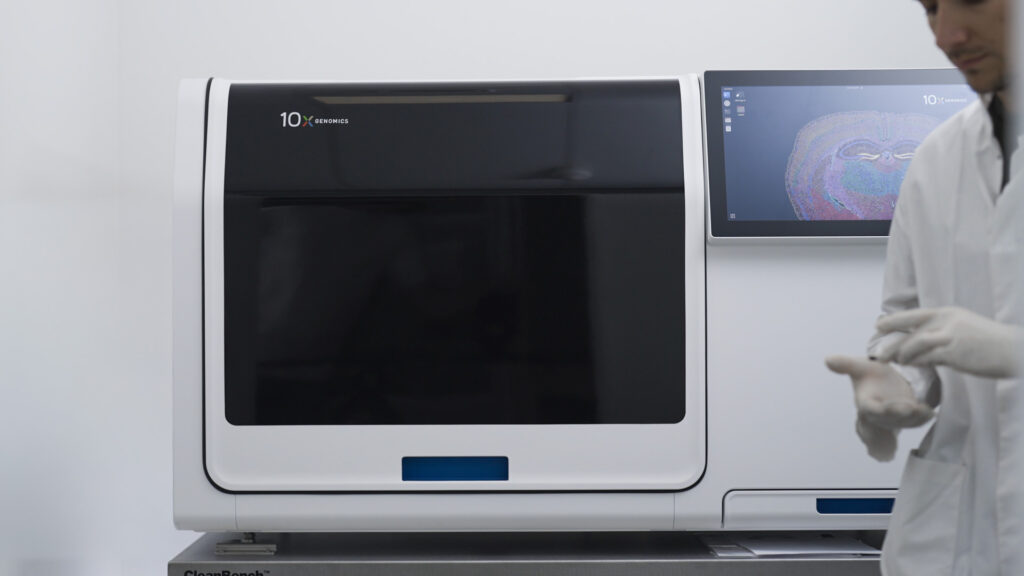
We nominate and rank targets and biomarkers using FFPE transcriptomics with a fit-for-purpose design (whole-transcriptome or focused panels; cohort screening or deep mechanistic profiling). Results are delivered as actionable evidence—not raw data.
Typical outputs
-
Ranked target shortlist with evidence tags
-
Subtype enrichment and stratification hypotheses
-
Pathway and signature context with clinical metadata (when available)
3) Validate target expression in tissues
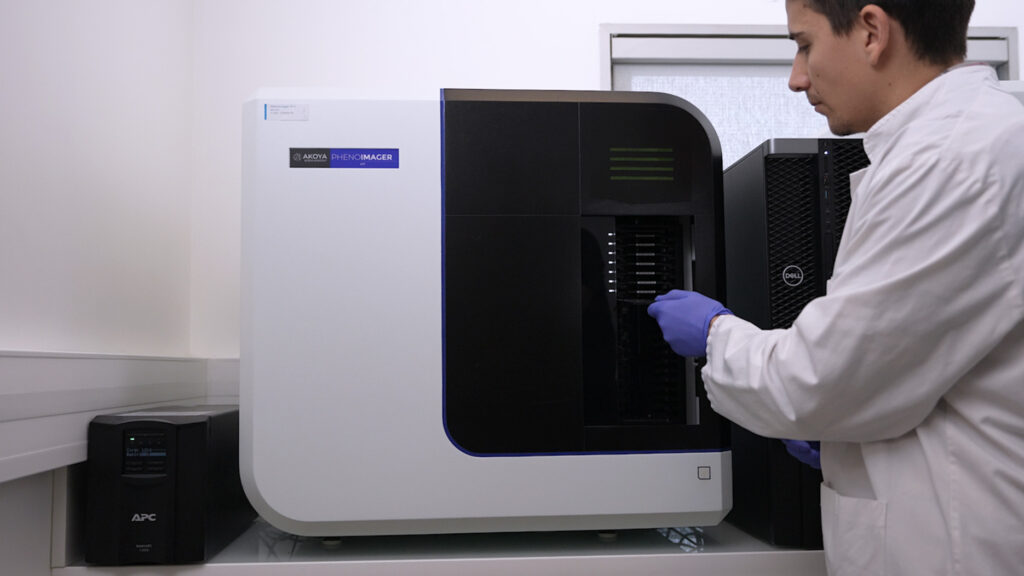
After nomination, we confirm the target’s tissue-level relevance: prevalence at scale, protein localization, heterogeneity, and—when needed—normal tissue distribution to support early safety de-risking.
Typical outputs
-
Quantitative target expression metrics (per sample + cohort summary)
-
Localization and compartment-specific readouts (when applicable)
-
Validation roadmap for indication selection and cutoffs
Experts
in precision oncology
- FFPE-first discovery in clinically relevant cohorts (real-world tumor biology, subtype coverage)
- Certified transcriptomics expertise with a track record in translational oncology
- In-house data science + pathology integration to convert signals into interpretable evidence
Personalized
approach
- Decision-driven execution: designs scoped around your go/no-go question, not around a platform
- A dedicated study director (PhD) overseeing your project from experimental plan to final report discussion
- Custom data analysis & reports to support decision-making




What is oncology target discovery?
Oncology target discovery is the process of identifying and prioritizing therapeutic targets and biomarkers using evidence from human tumor biology—then confirming the most promising candidates with fit-for-purpose validation so teams can make confident go/no-go decisions.
Do you work only with FFPE tissues?
FFPE is a core strength because it enables access to clinically annotated, real-world cohorts and is compatible with both transcriptomics and tissue-based validation. However, we can source and analyze fresh tissues and peripheral samples.
I already have a target candidate. Which service should I start with?
If you already have candidates and need to confirm prevalence, localization, heterogeneity, or normal tissue distribution, start with target expression profiling (validation step).
I have FFPE blocks but no transcriptomics data. Where should I start?
Start with FFPE transcriptomics target identification if your goal is to nominate and prioritize targets or biomarkers from patient tissues, especially across tumor subtypes or clinical strata.
I don’t have access to samples yet. Can you help?
Yes. If the main blocker is access to clinically relevant cohorts and metadata, begin with custom biospecimen sourcing so the study design and sample specifications are locked before data generation.
How do you choose between whole-transcriptome and focused panels?
It depends on the decision. Whole-transcriptome approaches are best for unbiased discovery and program biology, while focused panels are efficient for hypothesis-driven questions, quicker iteration, and cost control. We recommend a fit-for-purpose strategy during scoping.
Can you integrate clinical metadata and outcomes?
When available, we can integrate clinical and pathological variables to support subgroup analyses, enrichment hypotheses, and decision-support statistics—while keeping all data de-identified and compliant with applicable requirements.
What does a typical target discovery deliverable look like?
A target discovery campaign typically ends with a ranked shortlist of candidates, a summary of the evidence supporting each, key cohort-level figures, and a recommended validation roadmap (which often includes tissue-level expression confirmation).
How long does a target discovery project take?
Timelines depend on cohort access and study scope. Most projects follow a staged approach (pilot → scale) to de-risk early and accelerate decision-making once feasibility is confirmed.
Can you start from our existing data or public datasets?
Yes. We can start from sponsor-provided datasets (and/or public resources) and add harmonized analysis, prioritization logic, and a validation plan aligned to your program goals.
Your contacts

Talk to our team !
Paul Marteau, PharmD (preclinical study director), Imane Nafia, PhD (CSO), Loïc Cerf, MSc (COO), Alban Bessede, PhD (founder, CEO), Jean-Philippe Guégan, PhD (CTO)
Tell us about your project !
Target Identification & Validation for Cancer Immunotherapies I CRO Services in Immuno-Oncology
Explicyte Immuno-Oncology is a specialty CRO exclusively focused on immuno-oncology. Over the past 10 years, Explicyte developed a solid expertise in target identification and validation for novel cancer immunotherapies. Operating a comprehensive technology platform, Explicyte can process a wide range of preclinical and clinical samples, to generate robust data sets, and manipulate data using relevant in-house capacities in bioinformatics. We provide CRO services for immuno-oncology target discovery to academic researchers and pharmaceutical companies in Europe, USA, Canada, Japan and Korea.