

Explicyte provides image analysis services for digitized mIF and IHC slides, combining image processing, cell phenotyping, and spatial tissue analysis. Building on our expertise in IHC/mIF panel development — we operate an ISO 13485- and ISO 9001-certified histopathology platform — we specialize in the validation of new targets and biomarkers in FFPE archives, preclinical samples, and patient biopsies.
- Fast turnaround: receive your custom image analysis report within 4 weeks
- Human expertise and AI: beyond machine learning workflows, our analyses rely on experienced bioinformaticians and histopathologists
- Proven track record in FFPE pathology: our digital pathology data have been published in leading oncology journals
Explicyte is certified ISO 13485:2016 & ISO 9001:2015 by Euro-Quality System (certificates 260133/1637F/1 and 260133/1637F/2). Scope: Precision Oncology – Design and development of novel tissue biomarkers – Tissue biomarker testing services to support therapeutic decision-making








Image preprocessing & QC
1 week
- Slide quality assessment
- Artefact removal
- Image registration (if required)
- Image normalization (across cohort)
- Segmentation of nuclei and cells
- Marker signal extraction
Deliverables
- Segmentation masks for nuclei and cells
- Marker intensity tables per cell/ROI (raw and normalized)
- QC report with image metrics
How do I transfer my IHC/miF images?
You can upload either whole digitized slides or ROI images to our secured infrastructure (EU-based servers, AES-encrypted storage, high-speed transfer).
What are the accepted file formats?
Whole slide images
Multiplex panel images (IHC, IF)
Pre-processed marker images or segmentation masks
ROI annotations and tissue metadata (optional)
Cell phenotyping & tissue annotation
2 weeks
- Level 1 + cell type identification
- Multiplex marker co-expression analysis
- Automated cell phenotyping using AI-assisted tools
- Tissue compartment classification (tumor, stroma, immune zones)
- ROI-level and cell-level quantitative summaries
- Spatial relationships between cell populations
Deliverables
- Annotated cell datasets (phenotype per cell)
- ROI-level summaries (cell counts, marker expression)
- Tissue compartment maps
- Visualizations of cell phenotypes across tissue sections
- Intermediate analysis report
Advanced analysis
4 weeks
- Level 2 + spatial and functional insights
- Quantification of cell–cell interactions and neighborhoods
- Spatial distribution analysis of immune and stromal cells
- Co-expression networks within tissue compartments
- Comparative analysis across samples or experimental conditions
- Publication-ready figures and full analytical report
Deliverables
- Full analytical report
- Spatial maps
- Quantitative tables for all markers, cell types, and ROIs
- Publication-ready figures and figures for presentations
Ask us about additional analysis strategies:
- Custom biomarker scoring by pathologist (TPS, CPS, H-score)
- Phenotypic clustering and unsupervised cell type discovery
- Spatial statistics: Ripley’s K, neighborhood enrichment, colocalization analysis, multi-omic integration
Tissue segmentation
Machine-learning-driven analysis of tissue architecture based on pixel classification.
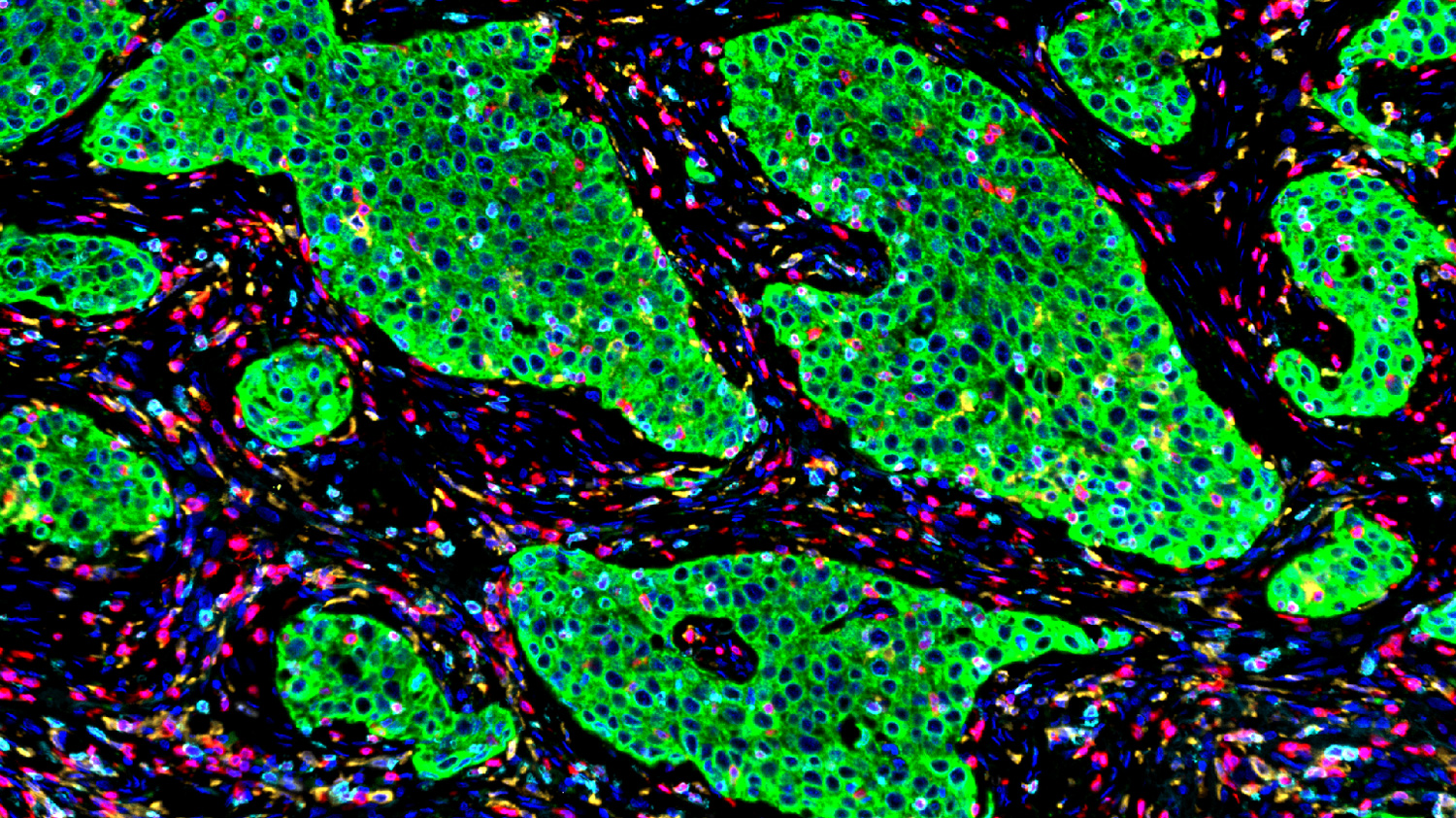
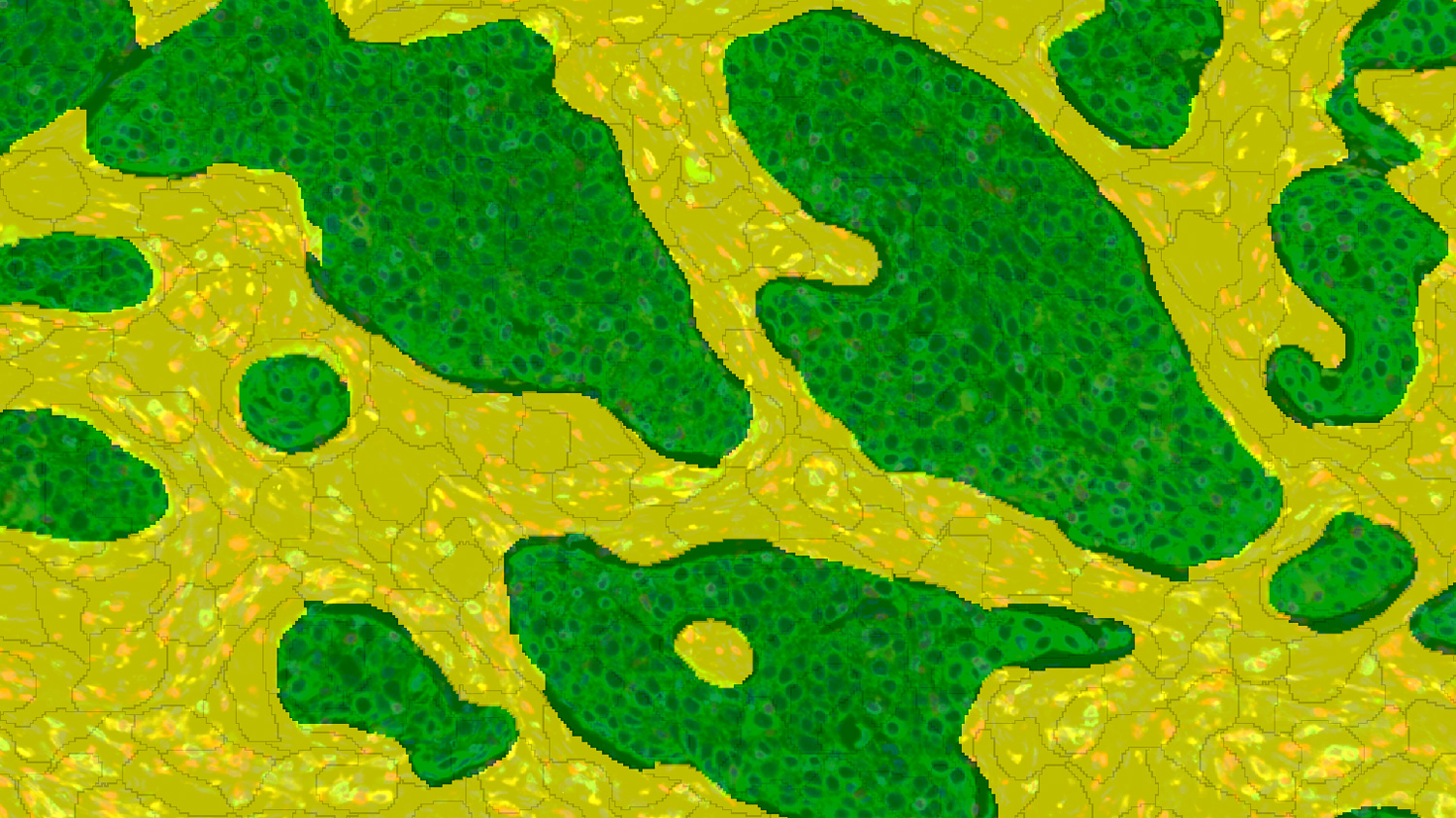
An NSCLC adenocarcinoma sample was stained using a multiplex immunofluorescence (IHF) panel: CD8 (cyan), CD4 (red), CD163 (yellow), PanCK (green), and DAPI (blue). The tissue was segmented into superpixels, classified automatically into Tumor (green) or Stroma (yellow) compartments using advanced machine-learning methods.
Cell segmentation & Phenotyping
Quantitative cell identification and characterization through proprietary segmentation workflows
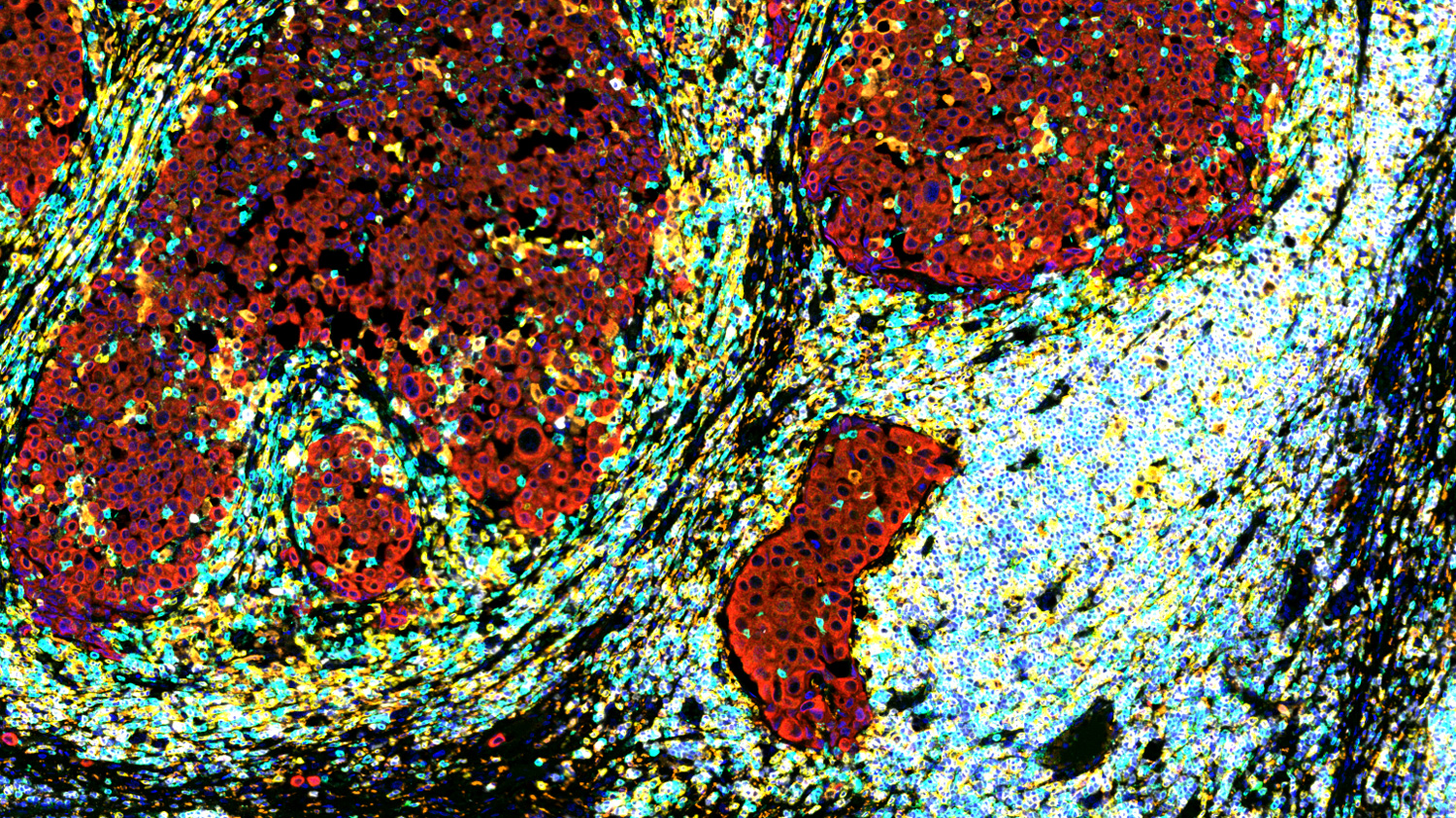
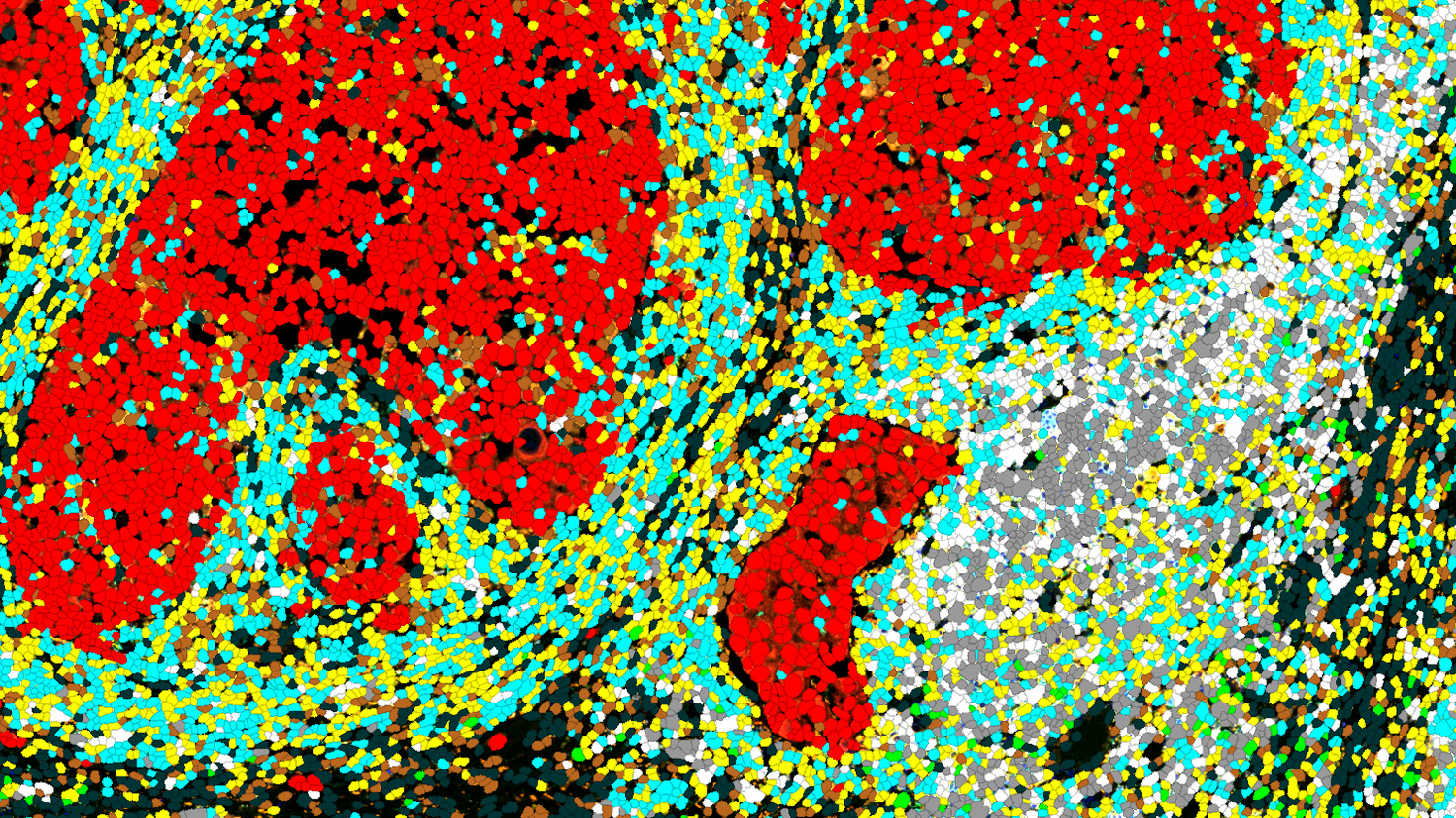
An NSCLC adenocarcinoma sample stained with a multiplex panel (CD3-yellow, CD8-cyan, CD20-white, CD23-green, CD163-orange, PanCK-red, and DAPI-blue) underwent individual cell segmentation. Following signal normalization, cell phenotypes were defined using a cytometry-based analysis workflow. Phenotypes included macrophages (orange), B cells (white), mature B cells (gray), follicular dendritic cells (green), CD4 T cells (yellow), CD8 T cells (cyan), and tumor cells (red). Unstained cells are shown in black.
Spatial analysis
Detailed analyses of spatial relationships, including nearest-neighbor distances, spatial heterogeneity, and cellular colocalization.
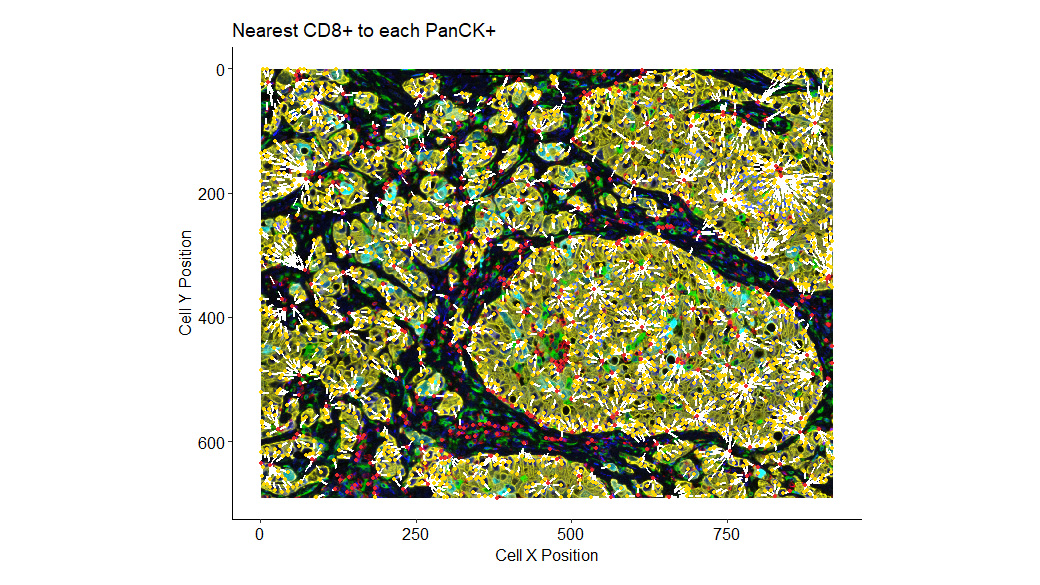
Nearest-neighbor distances were calculated between PanCK-positive and CD8-positive cells. The minimum distance between these cells is visually represented by white dashed lines.
Tailored bioinformatic analysis
In-depth computational analysis customized to your research goals, including marker expression profiling, object measurements, density quantification, and correlation with clinical metadata.
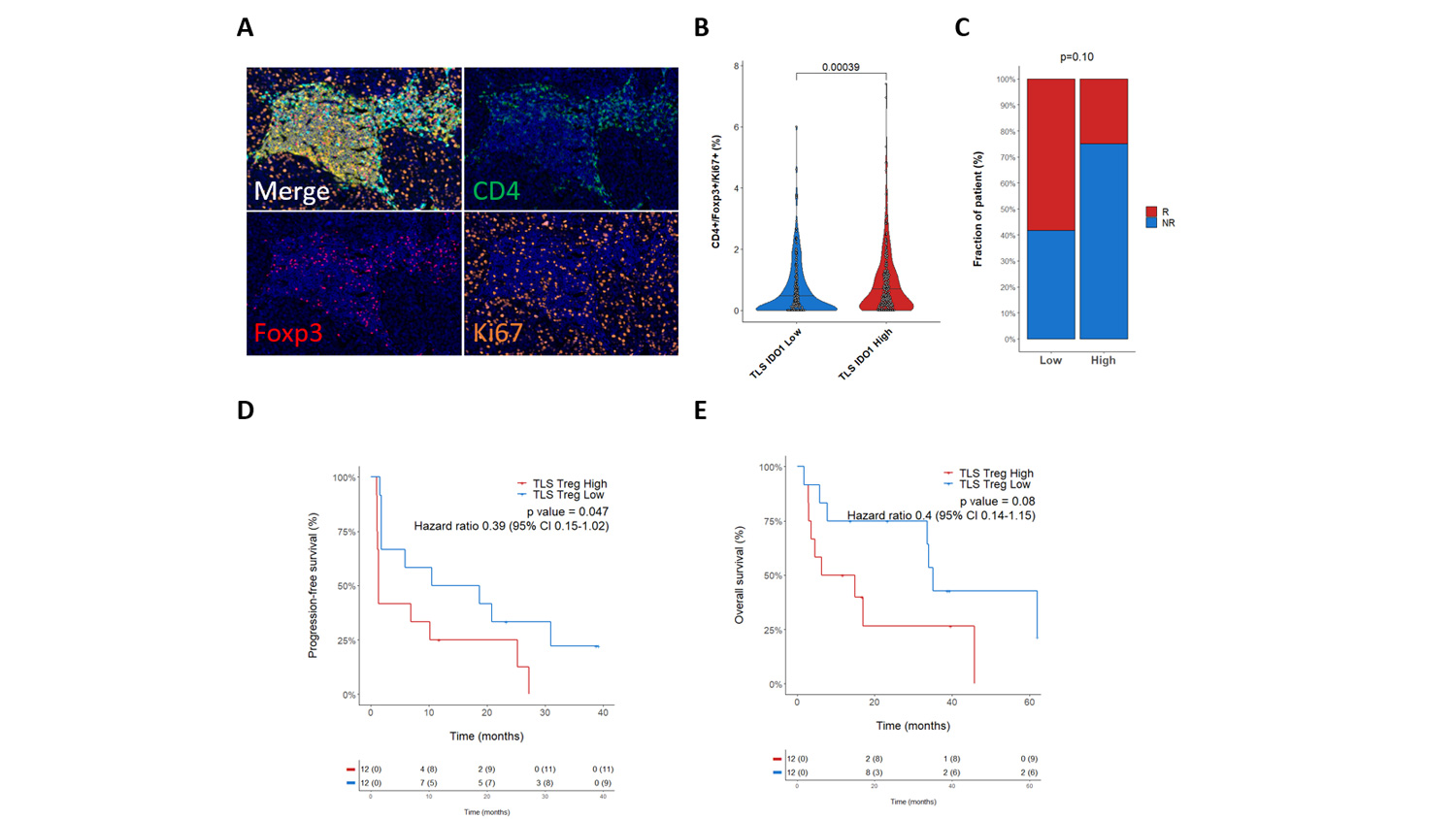
Bessede et al. Clin Cancer Res . 2023 Sep 26;29(23):4883–4893. doi: 10.1158/1078-0432.CCR-23-1928
Experts
in Image Analysis
- 10 years of experience in the analysis of FFPE-based mIF and IHC images
- 30+ papers leveraging digital pathology datasets
- Robust interpretation by bioinformaticians and histopathologists
Personalized
approach
- Tailored analysis following your interaction with our scientific team, we design custom algorithms and deep learning procedures
- Open-source solutions you can access your images and dataset easily, without the need for a commercial license
- Decision-ready outputs with clear figures and visualizations
Can Explicyte analyze mIF and IHC slides generated outside Explicyte?
Yes. Our image analysis services are available as a standalone offering, which means we can support projects even when staining, slide scanning, or assay development was performed by another laboratory, CRO, or internal team.
What types of images do you analyze?
We analyze digitized slides generated from multiplex immunofluorescence (mIF) and immunohistochemistry (IHC) workflows. Depending on the project, we can work from whole-slide images, ROI images, multiplex marker images, pre-processed images, or segmentation masks.
What is included in your image preprocessing and QC package?
Our Level 1 package covers the core steps required to generate a clean and analyzable image dataset. This includes slide quality assessment, artefact removal, image registration when required, normalization across the cohort, segmentation of nuclei and cells, and extraction of marker signals.
What is included in your cell phenotyping and tissue annotation package?
Our Level 2 package extends preprocessing with biological interpretation. This includes cell type identification, multiplex co-expression analysis, AI-assisted phenotyping, tissue compartment classification, ROI-level summaries, and analysis of spatial relationships between cell populations.
What is included in your advanced analysis package?
Our Level 3 package is designed for projects requiring deeper spatial insight. Depending on the study goals, this may include quantification of cell–cell interactions, neighborhood analysis, spatial distribution of immune and stromal cells, co-expression networks within tissue compartments, comparative analysis across study groups, and publication-ready figures.
Can you quantify spatial relationships between cell populations?
Yes. We provide dedicated spatial analyses such as nearest-neighbor distances, colocalization, neighborhood analysis, and other spatial statistics to characterize how cell populations are organized within the tissue microenvironment.
Can you provide tissue segmentation and cell phenotyping?
Yes. Tissue segmentation and cell phenotyping are core parts of our workflows. We can classify tissue compartments, segment individual cells, extract marker intensities, and define phenotypes at the single-cell level based on multiplex marker expression.
Can you support FFPE-based biomarker studies?
Yes. We have strong experience working with FFPE tissue samples in biomarker-oriented oncology studies. Our image analysis workflows are designed to help validate target and biomarker expression in archived tissues, preclinical samples, and patient biopsies.
Do you provide publication-ready figures and reports?
Yes. Our goal is to deliver outputs that are directly usable by scientific teams. Depending on the package, deliverables can include quantitative tables, spatial maps, annotated datasets, structured reports, and publication-ready figures for manuscripts, abstracts, or presentations.
Can you adapt the analysis to our scientific question?
Yes. We do not apply a one-size-fits-all workflow. Our image analysis strategy is adapted to your panel design, tissue type, project objectives, and reporting needs, whether your goal is biomarker validation, tissue architecture analysis, immune-contexture characterization, or translational decision support.
Who is this service for?
Our mIF and IHC image analysis services are designed for biotech companies, pharmaceutical companies, academic teams, and translational research groups that need expert interpretation of digitized pathology slides.
Why work with Explicyte for mIF and IHC image analysis?
We combine strong expertise in digital pathology, multiplex image analysis, FFPE-based biomarker studies, and translational oncology. Our objective is to turn complex pathology images into robust, actionable results that support real scientific and development decisions.
Your contacts

Talk to our team !
Paul Marteau, PharmD (preclinical study director), Imane Nafia, PhD (CSO), Loïc Cerf, MSc (COO), Alban Bessede, PhD (founder, CEO), Jean-Philippe Guégan, PhD (CTO)