

Explicyte provides standalone data analysis services for bulk RNA-seq and GeoMx digital spatial profiling datasets for industry sponsors and academic teams. Since 2019, our bioinformatics team has developed strong expertise in the analysis of transcriptomic datasets, including spatial profiling approaches, with a particular focus on FFPE-based target discovery and biomarker studies.
- Fast turnaround: receive your custom data analysis report within 4 weeks.
- Robust pipeline: standardized workflows for transcriptomic and spatial profiling data
- Human expertise, not just AI: each dataset is interpreted by an experienced bioinformatician.
- Proven track record in FFPE transcriptomics: transcriptomic datasets and figures published in key oncology journals.




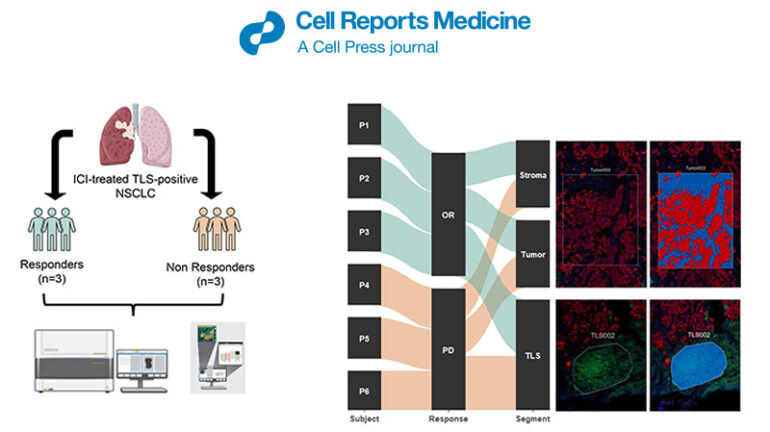
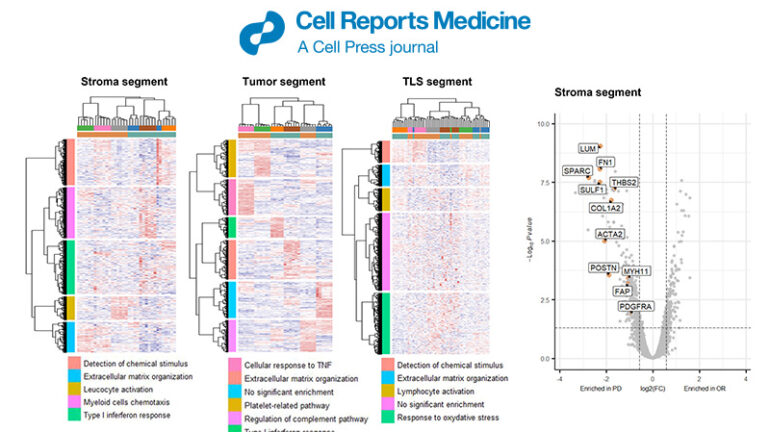
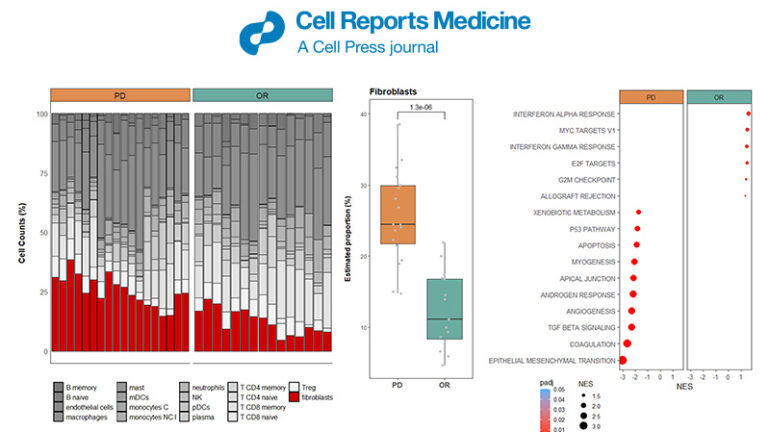
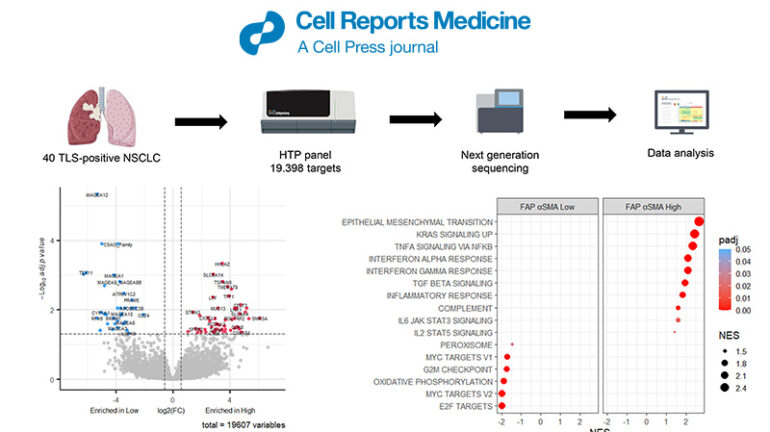
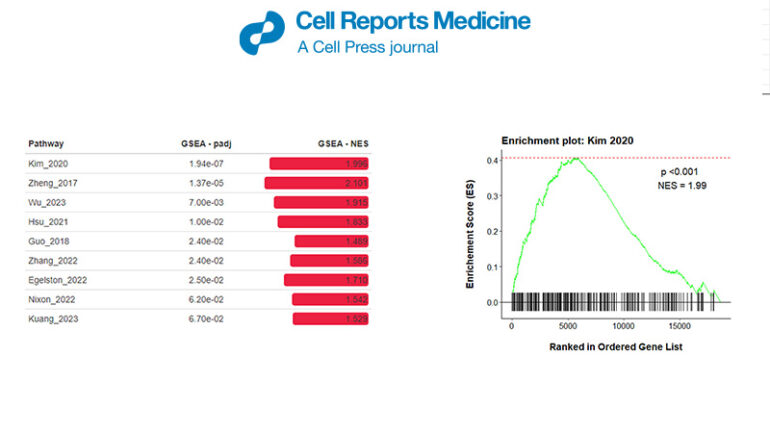
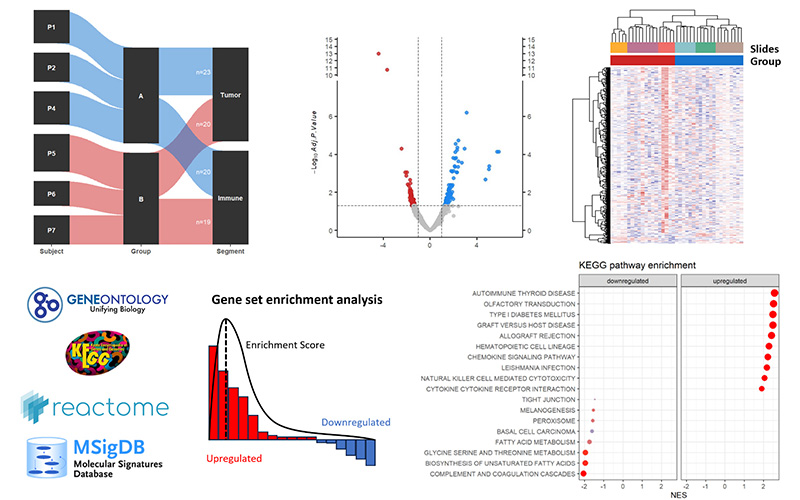
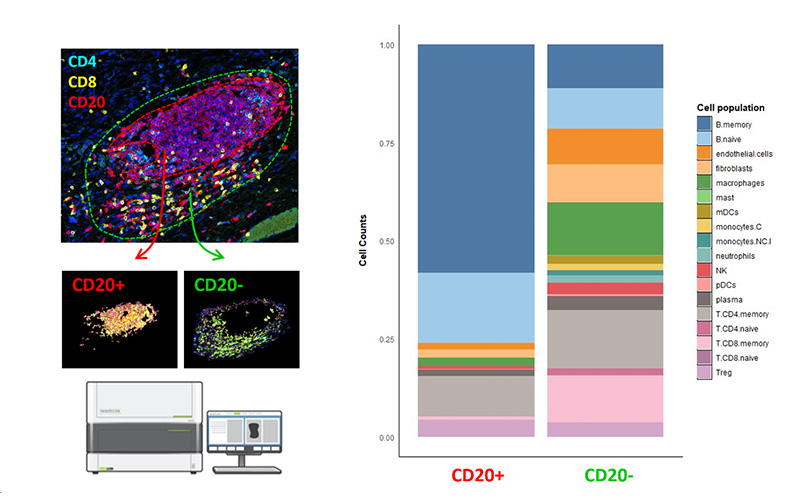
Example of GeoMx dataset analysis and bulk RNA-seq analysis in FFPE samples from lung cancer patients with mature tertiary lymphoid structures. Read full paper in Cell Reports Medicine (2025)
Raw data processing & quality control
1 week
Bulk RNA-seq
- Read quality control
- Alignment to reference genome / transcriptome
- Gene expression quantification (gene count matrix)
- Sequencing metrics and mapping statistics
GeoMX DSP
- Read processing and barcode demultiplexing
- Probe alignment and transcript quantification
- ROI-level count matrix generation
- Sequencing and probe performance metrics
Deliverables
- Raw and normalized gene count matrices
- Sequencing and mapping quality metrics
- Dataset quality control report
- Initial dataset summary
How do I transfer my transcriptomic dataset?
You can upload data to our secure server (EU-based, AES-encrypted storage, high-speed transfer).
What file formats are accepted for Bulk RNA-seq and GeoMx DSP data analysis?
For Bulk RNA-seq, accepted input files include raw FASTQ files, BAM alignment files, and gene count matrices.
For GeoMx DSP, we accept raw FASTQ files, GeoMx DSP count matrices, and ROI metadata.
Optional sample metadata can also be provided, including experimental design, treatment information, clinical variables, and batch information, to improve downstream analysis and biological interpretation.
Dataset annotation
2 weeks
- Level 1 + full dataset preprocessing
Bulk RNA-seq
- Sample-level quality control and outlier detection
- Data normalization and variance stabilization
- Batch effect correction
- Exploratory analysis (PCA / clustering)
- Initial biological annotation of sample groups
GeoMX DSP
- ROI filtering and quality control
- Probe quality filtering
- Normalization across ROIs
- Spatial clustering of ROIs
- Annotation of tissue compartments or regions
Deliverables
- Cleaned and normalized dataset
- Quality-controlled sample or ROI matrix
- Exploratory analysis visualizations (PCA, clustering)
- Intermediate analysis report
Advanced analysis
4 weeks
- Level 2 + comprehensive biological interpretation
Bulk RNA-seq advanced analysis
- Differential gene expression analysis between conditions
- Identification of biomarkers and gene signatures
- Gene set enrichment and pathway analysis
- Functional annotation of gene programs
- Immune cell estimation
GeoMX DSP advanced analysis
- Differential expression between tissue regions or conditions
- Identification of spatially enriched genes
- Pathway enrichment analysis in spatial compartments
- Spatial gene expression pattern analysis
- Immune cell estimation
Deliverables
- Full analytical report
- Publication-ready figures and summary report
- All processed datasets and analysis scripts
For additional strategies, such as gene regulatory network inference and multi-omics integration, consult us.
Deliverables
- FASTQ and BAM files
- Processed gene expression matrices (raw and normalized counts)
- Quality control report (sequencing metrics, mapping statistics, sample QC)
- Exploratory analysis (PCA, clustering, sample relationships)
- Differential expression results with statistical metrics
- Gene set enrichment and pathway analysis
- Biomarker and gene signature identification
- Publication-ready figures and analysis report
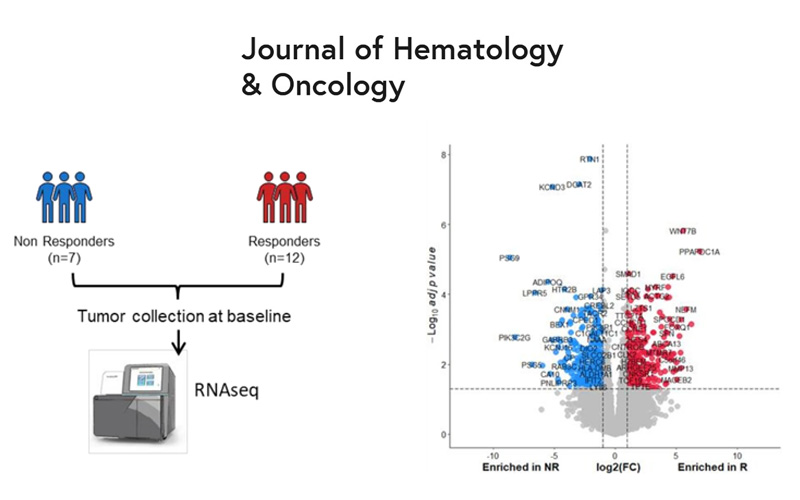
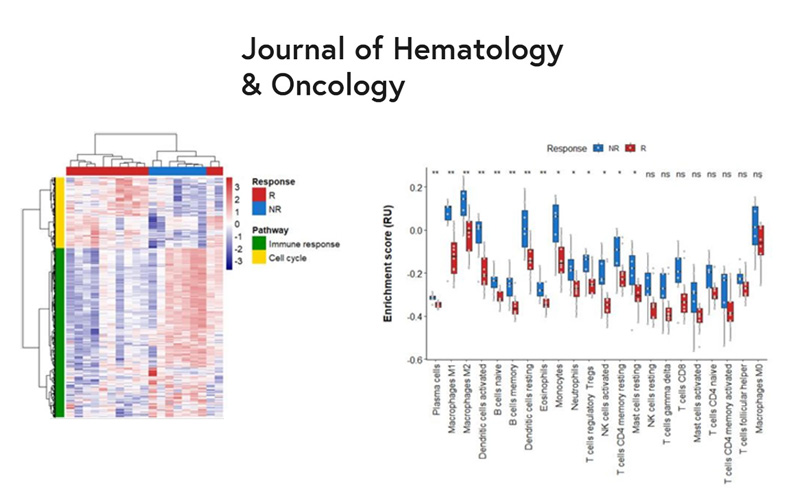
Example of an RNA-seq analysis workflow in baseline samples from 24 sarcoma patients treated with neoadjuvant chemotherapy: differential gene expression between responders and non-responders, heatmap of Gene Ontology biological process enrichment scores, and boxplot of immune cell estimates by response status. Read full paper
Deliverables
- FASTQ and DCC files
- Processed ROI-level gene expression matrices
- ROI metadata tables (sample ID, region annotation, segmentation information)
- Quality control report (sequencing metrics, ROI filtering, probe performance)
- Normalized spatial gene expression dataset
- Spatial clustering and ROI classification
- Differential expression between tissue regions or biological conditions
- Spatial pathway enrichment analysis
- Cell type deconvolution
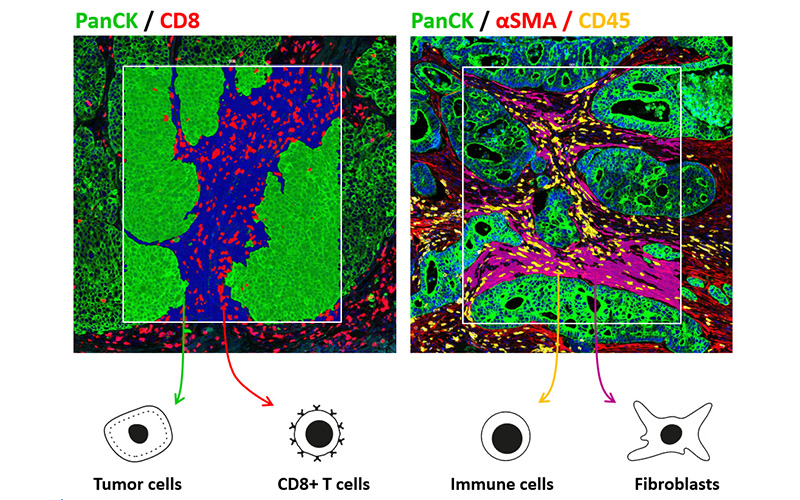
- Spatial visualization maps of gene expression patterns
- Publication-ready spatial figures and analysis report
Experts
in RNA-seq Analysis
- Strong expertise in Bulk RNA-seq and GeoMx DSP data analysis
- Proven experience with FFPE-derived biomarker studies
- Dedicated bioinformatics team for scientifically robust interpretation
Personalized
approach
- Tailored workflows aligned with your study objectives
- Analysis adapted to your timeline and budget constraints
- Actionable reports and publication-ready figures to support decision-making
Can Explicyte analyze Bulk RNA-seq or GeoMx DSP datasets generated outside Explicyte?
Yes. Our data analysis services are available as a standalone offering, which means we can support projects even when the wet-lab work was performed by another CRO, a core facility, or your internal team. We regularly work on externally generated datasets and adapt our analysis workflow to the study design, dataset quality, and scientific objectives.
What is included in your primary analysis package?
Our primary analysis package covers the core processing steps required to convert raw data into a reliable dataset. Depending on the platform, this includes read processing, alignment, transcript quantification, quality control metrics, and generation of count matrices. This package is designed for teams that need robust processing and QC before moving into interpretation.
What is included in your dataset annotation package?
Our dataset annotation package extends primary analysis with full preprocessing and first-level biological interpretation. For Bulk RNA-seq, this typically includes sample-level quality control, normalization, exploratory analysis, and identification of major sample groups. For GeoMx DSP, this includes ROI filtering, normalization, spatial clustering, and annotation of tissue compartments or biological regions.
What is included in your advanced analysis package?
Our advanced analysis package is designed for projects requiring deeper biological insight. Depending on the study goals, this may include differential expression analysis, pathway enrichment, biomarker discovery, immune-cell estimation, spatial comparison of tissue compartments, and generation of publication-ready figures and final reports.
How long does a Bulk RNA-seq or GeoMx DSP analysis project usually take?
Timelines depend on the complexity of the dataset and the level of analysis selected. As a general guide, primary analysis is usually delivered within about 1 week, dataset annotation within about 2 weeks, and advanced analysis within about 4 weeks. For larger or multi-cohort studies, we define a tailored timeline at project kickoff.
Do you support FFPE transcriptomics projects?
Yes. We have strong experience working on FFPE-derived transcriptomic datasets, including biomarker-oriented studies and spatial profiling projects. Our team is familiar with the specific constraints of FFPE material and can help extract robust biological insight from these datasets.
Can you compare treatment groups, responders vs non-responders, or primary vs metastatic samples?
Yes. This is one of the most common objectives of these analyses. We can compare biological groups across Bulk RNA-seq datasets, or across GeoMx DSP regions and sample classes, to identify differentially expressed genes, pathways, and spatially enriched programs associated with response, resistance, progression, or metastasis.
Can you identify biomarkers and actionable biological signatures?
Yes. Our workflows are designed to support biomarker discovery and biological interpretation. Depending on the project, this may include differential expression, pathway analysis, immune signatures, spatial compartment analysis, and prioritization of candidate genes or molecular programs associated with the phenotype of interest.
Can you integrate Bulk RNA-seq and GeoMx DSP results in the same project?
Yes. When relevant, we can analyze both data types within the same framework to strengthen interpretation. Bulk RNA-seq can provide a global view of transcriptomic changes across samples, while GeoMx DSP adds spatial resolution across selected tissue compartments or regions of interest.
How do I choose between Bulk RNA-seq and GeoMx DSP?
The choice depends on the biological question. Bulk RNA-seq is usually the right approach when you want a global sample-level view of transcriptomic changes across cohorts or conditions. GeoMx DSP is more appropriate when spatial context matters and you need to compare specific tissue compartments or regions of interest within FFPE sections. In some projects, combining both approaches provides the strongest insight.
Who is this service for?
Our Bulk RNA-seq and GeoMx DSP data analysis services are designed for biotech companies, pharmaceutical companies, academic teams, and translational research groups that need rapid, expert interpretation of transcriptomic and spatial profiling datasets.
Why work with Explicyte for Bulk RNA-seq and GeoMx DSP data analysis?
We combine a dedicated bioinformatics team, strong experience in transcriptomics and spatial profiling, proven expertise in FFPE studies, and a translational mindset focused on actionable interpretation. Our goal is to deliver analyses that are scientifically rigorous, operationally efficient, and aligned with the decisions our clients need to make.
Talk to our team

Talk to our team !
Paul Marteau, PharmD (preclinical study director), Imane Nafia, PhD (CSO), Loïc Cerf, MSc (COO), Alban Bessede, PhD (founder, CEO), Jean-Philippe Guégan, PhD (CTO)