MODALITY-SPECIFIC PRECLINICAL ASSAYS
ADC preclinical assays & CRO services: target qualification, efficacy and translational profiling
Understand what drives ADC activity — from target expression and internalization to payload sensitivity, tumor heterogeneity and patient-derived response.
Explicyte designs fit-for-purpose in vitro and ex vivo studies for antibody-drug conjugates, combining human tissue target profiling, functional ADC characterization, kinetic tumor cell killing in 2D cultures and 3D models, including patient-derived models.
Target qualification · Binding & internalization · Kinetic cytotoxicity · Payload sensitivity · Bystander activity · Patient-derived models · Mechanistic profiling
ADC BIOLOGY
Target expression is only the beginning
A tumor can express the ADC target and still respond poorly. Conversely, ADC activity may persist in tumors with relatively low or heterogeneous target expression. ADC response reflects multiple interconnected biological determinants:

CASE STUDY · ANTI-TROP2 ADC
Anti-TROP2 ADC: target expression guides model selection, functional assays explain response
Model selection based on TROP2 expression
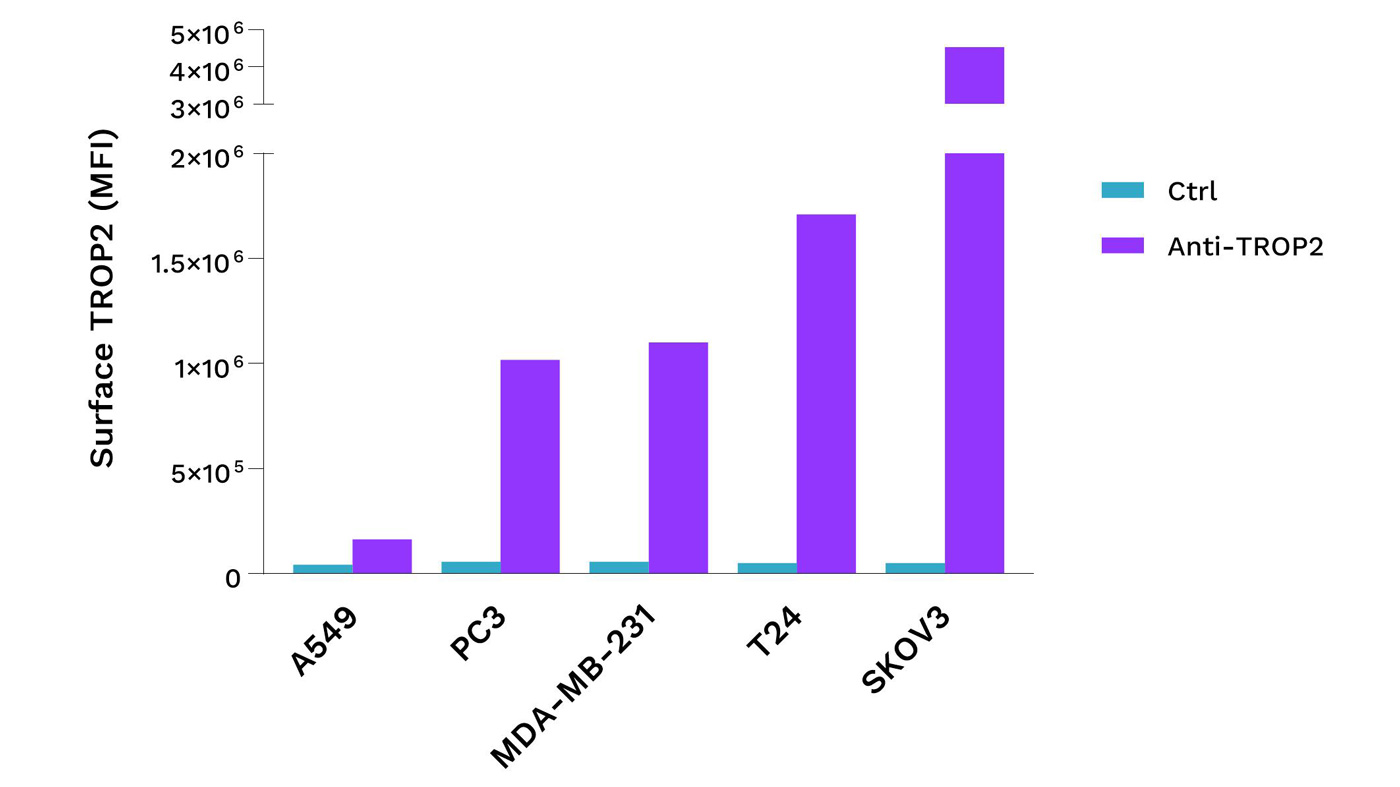
Step 1 — Qualify TROP2 expression across a cancer cell line panel
Cell surface TROP2 expression was characterized across a panel of human cancer cell lines including SKOV3, T24, MDA-MB-231, PC3 and A549.
This first step identified relevant TROP2-positive models for functional testing and provided the biological context needed to interpret differences in ADC response.
Real-time ADC cytotoxicity
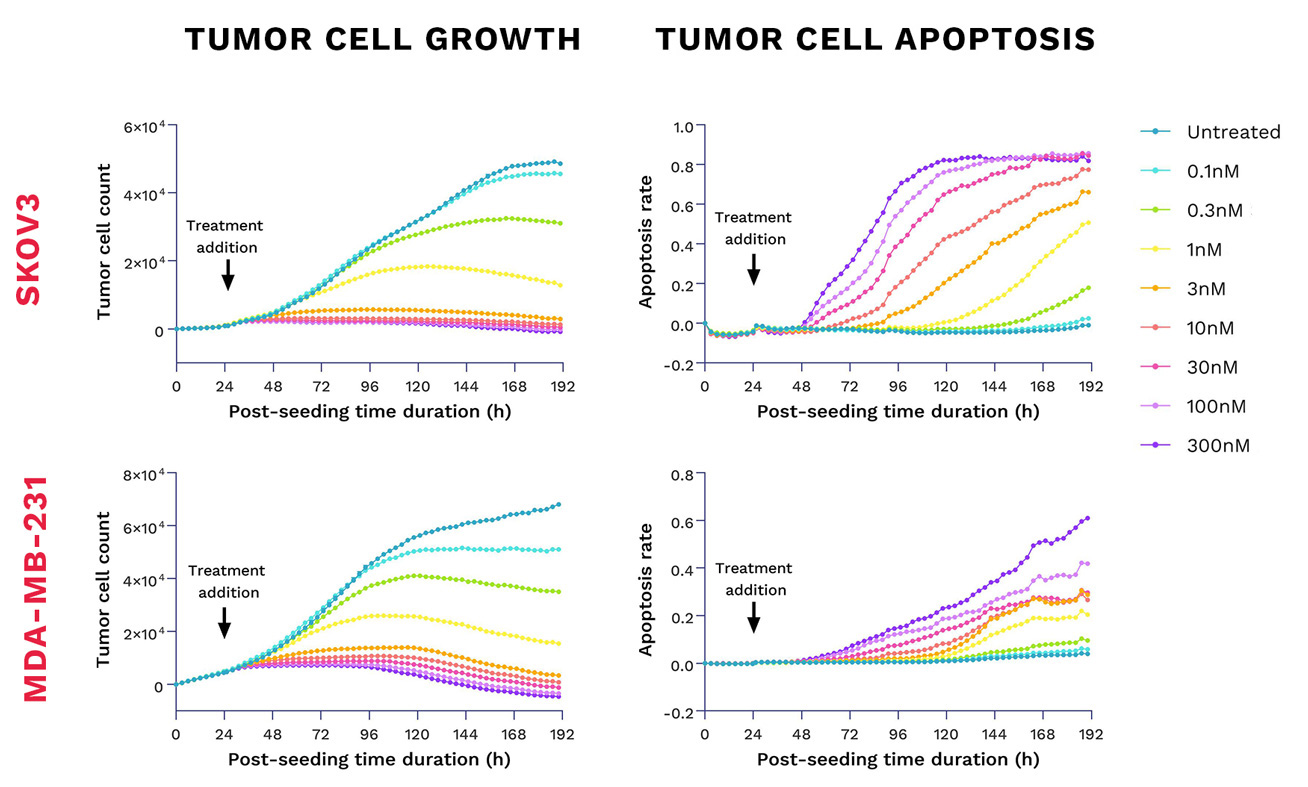
Step 2 — Measure functional ADC response over time
TROP2-positive SKOV3 and MDA-MB-231 cells were treated with sacituzumab govitecan and monitored by live-cell imaging.
Although both models expressed the therapeutic target, they displayed distinct sensitivity profiles to the ADC, highlighting the importance of pairing target-expression data with functional response measurements.
ADC vs payload
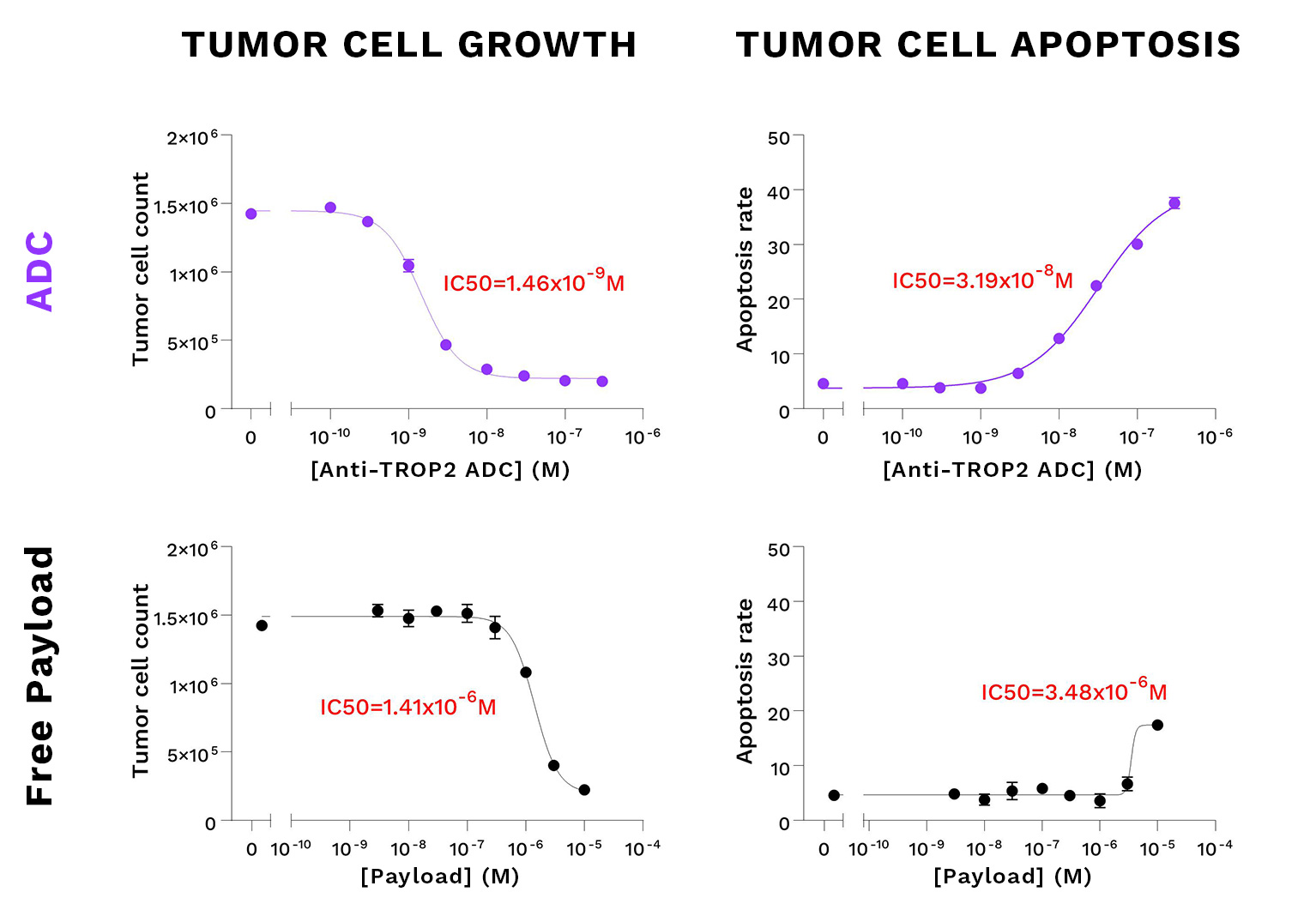
Step 3 — Put ADC response in the context of payload sensitivity
In SKOV3 cells, sacituzumab govitecan was compared with irinotecan, a prodrug of SN-38, to contextualize ADC activity relative to sensitivity to topoisomerase-I inhibition.
This comparison provides additional information on the intrinsic sensitivity of the tumor model to the payload mechanism, and can help guide subsequent mechanistic investigations.
Build the study around the biological question
Core ADC characterization
Four questions structure the core ADC framework — from target biology to functional response in heterogeneous tumors. Each question is mapped to models, readouts and platforms selected according to the molecule and development objective.
PRECLINICAL ADC CHARACTERIZATION
ADC assays aligned with your development questions
Build a fit-for-purpose ADC study from target qualification to functional efficacy, mechanism and translational biomarkers. Each program can combine the assays and models most relevant to the molecule, indication and stage of development.
EXTEND THE STUDY WHEN THE BIOLOGY REQUIRES IT
Add complexity when it answers a development question
Modules can be added to core framework when a specific biological or translational question requires deeper resolution.
Fc-dependent immune activity
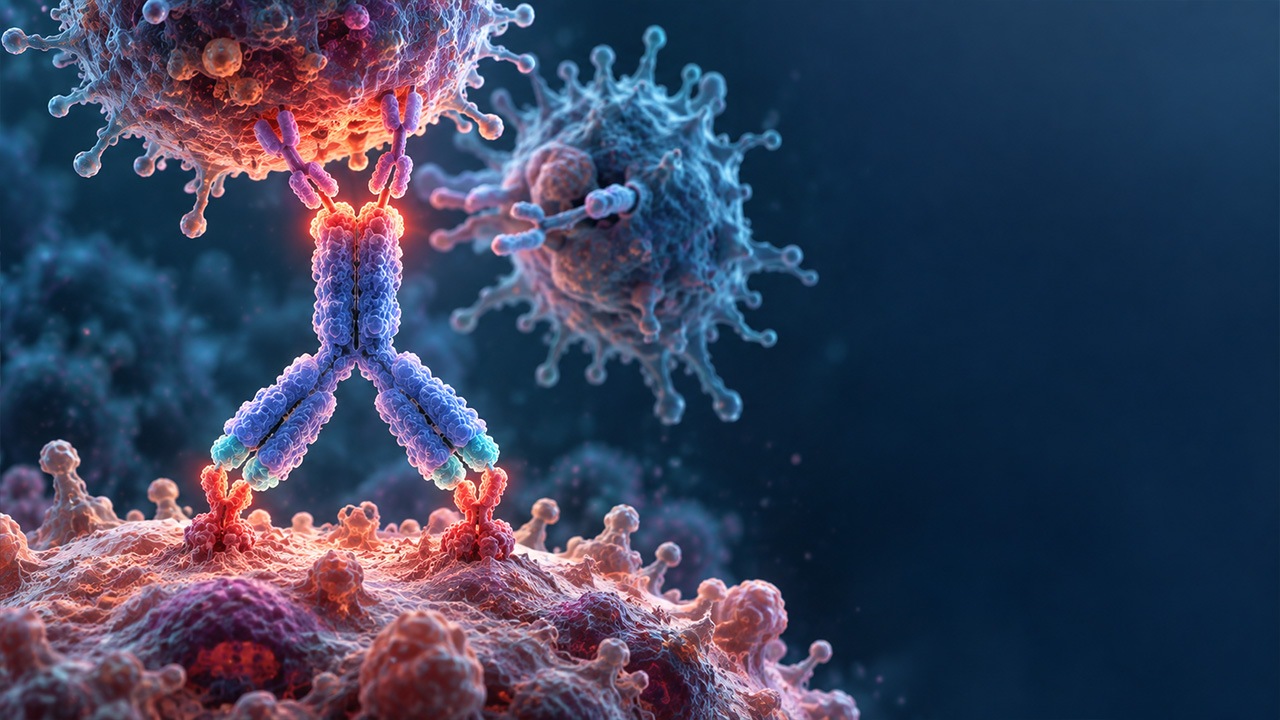
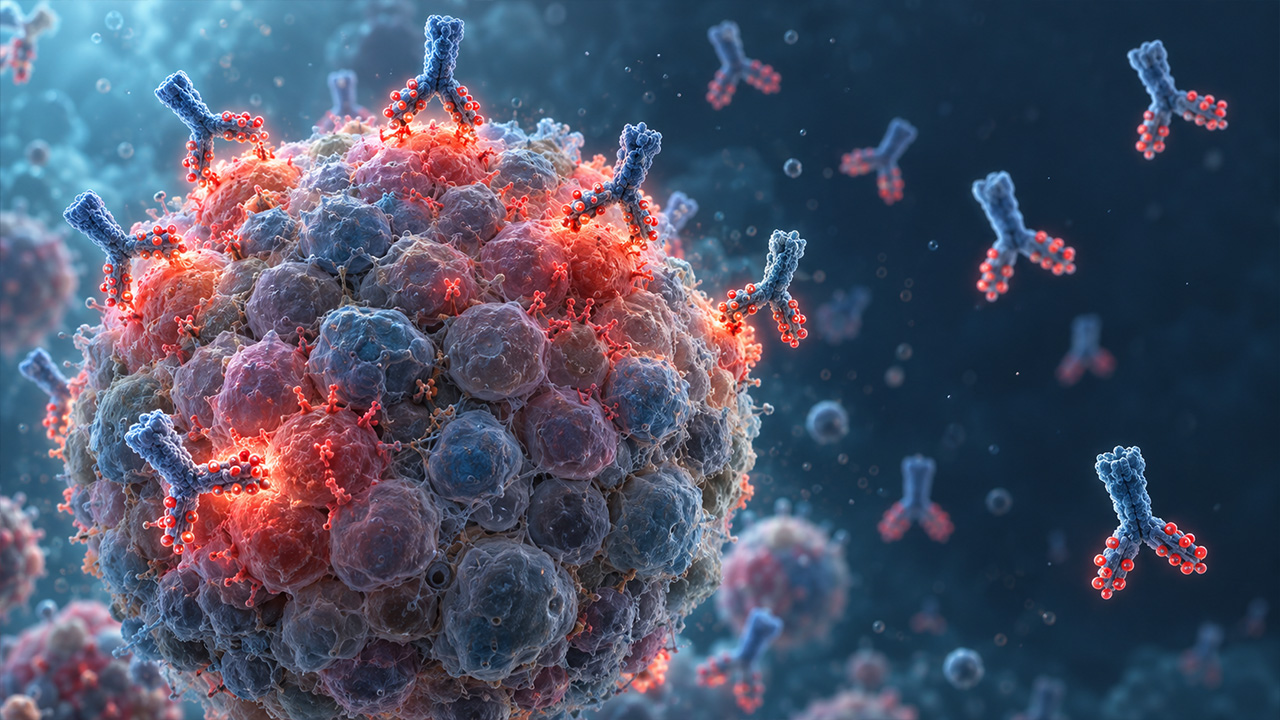
For ADCs with an Fc capable of engaging immune effector mechanisms, tumor cell killing can be evaluated in the presence of human PBMCs or isolated effector cell populations. This allows Fc-mediated activity, including ADCC, to be evaluated alongside payload-driven cytotoxicity.
Patient-derived 3D tumor models
Move beyond established cell lines into models that better represent patient-specific tumor biology, target heterogeneity, and tissue context. Early patient-derived organoids provide flexible 3D systems for functional treatment testing, while intact tumor fragments additionally retain native tissue architecture and spatial organization.
Mechanism of response and resistance
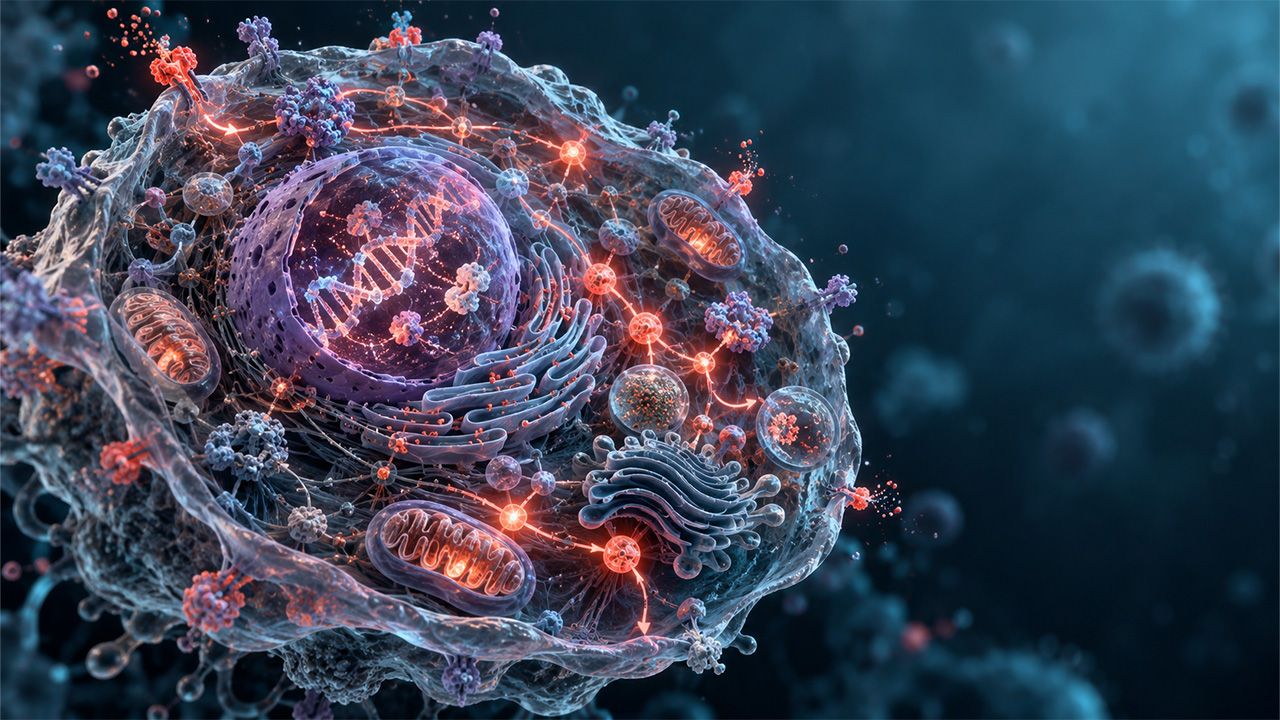
When models with similar target expression show different sensitivity profiles to the ADC, deeper profiling can generate hypotheses around cellular states, pathways, and molecular features associated with sensitivity or resistance. Functional data can be integrated with flow cytometry, single-cell RNA-seq and spatial biology.
Why work with Explicyte as your ADC preclinical CRO?
Connect human target biology with functional testing
Every ADC program is different, but a few principles run through every Explicyte study — from model selection to functional characterization and deeper mechanistic investigations.
Dissect ADC response
Model tumor heterogeneity directly
Escalate profiling when it adds value
Scientific continuity end-to-end

Paul Marteau, PharmD (study director), Imane Nafia, PhD (CSO), Loïc Cerf, MSc (COO), Alban Bessede, PhD (founder, CEO), Jean-Philippe Guégan, PhD (CTO)
Contact our team
Discuss your ADC preclinical program
Tell us your target, ADC format, payload, indications and current development stage. We can help define the models, assays, and complementary profiling needed to characterize target biology, internalization, functional activity, heterogeneity, and translational response.
ADC assays FAQ