MODALITY-SPECIFIC PRECLINICAL ASSAYS

ADC preclinical assays & CRO services: target qualification, efficacy and translational profiling

Understand what drives ADC activity — from target expression and internalization to payload sensitivity, tumor heterogeneity and patient-derived response.

Explicyte designs fit-for-purpose in vitro and ex vivo studies for antibody-drug conjugates, combining human tissue target profiling, functional ADC characterization, kinetic tumor cell killing in 2D cultures and 3D models, including patient-derived models.

Target qualification · Binding & internalization · Kinetic cytotoxicity · Payload sensitivity · Bystander activity · Patient-derived models · Mechanistic profiling

10+ years
of experience in preclinical & translational precision oncology
8 ADC targets
profiled across NSCLC, bladder, gastric and endometrial cancers
ADC programs
supported across preclinical development
100+
Human cancer cell lines available

ADC BIOLOGY

Target expression is only the beginning

A tumor can express the ADC target and still respond poorly. Conversely, ADC activity may persist in tumors with relatively low or heterogeneous target expression. ADC response reflects multiple interconnected biological determinants:

Target biology

Is the target expressed on the tumor cell surface, at what level, and how heterogeneous is its distribution across tumors and models?

ADC engagement and uptake

Does the ADC bind selectively to target-expressing cells and undergo efficient target-dependent internalization?

Payload sensitivity

How intrinsically sensitive is the tumor cell to the cytotoxic mechanism delivered by the ADC?

Tumor heterogeneity and bystander activity

Can cytotoxic activity extend from target-positive cells to neighboring target-low or target-negative populations?

Cellular context and resistance

Which tumor cell states or molecular programs are associated with sensitivity or resistance?

Explicyte integrates all these dimensions into one study strategy, built around the biology of the ADC and your development question, to provide an integrated understanding of the response.

Imane Nafia, PhD, Chief Scientific Officer at Explicyte

The value of ADC biology is not just in showing where the target is expressed. It is in understanding how tumor biology shapes response — and generating the evidence to support translational and development decisions.

Imane Nafia, PhD

Chief Scientific Officer, Explicyte

CASE STUDY · ANTI-TROP2 ADC

Anti-TROP2 ADC: target expression guides model selection, functional assays explain response

Model selection based on TROP2 expression

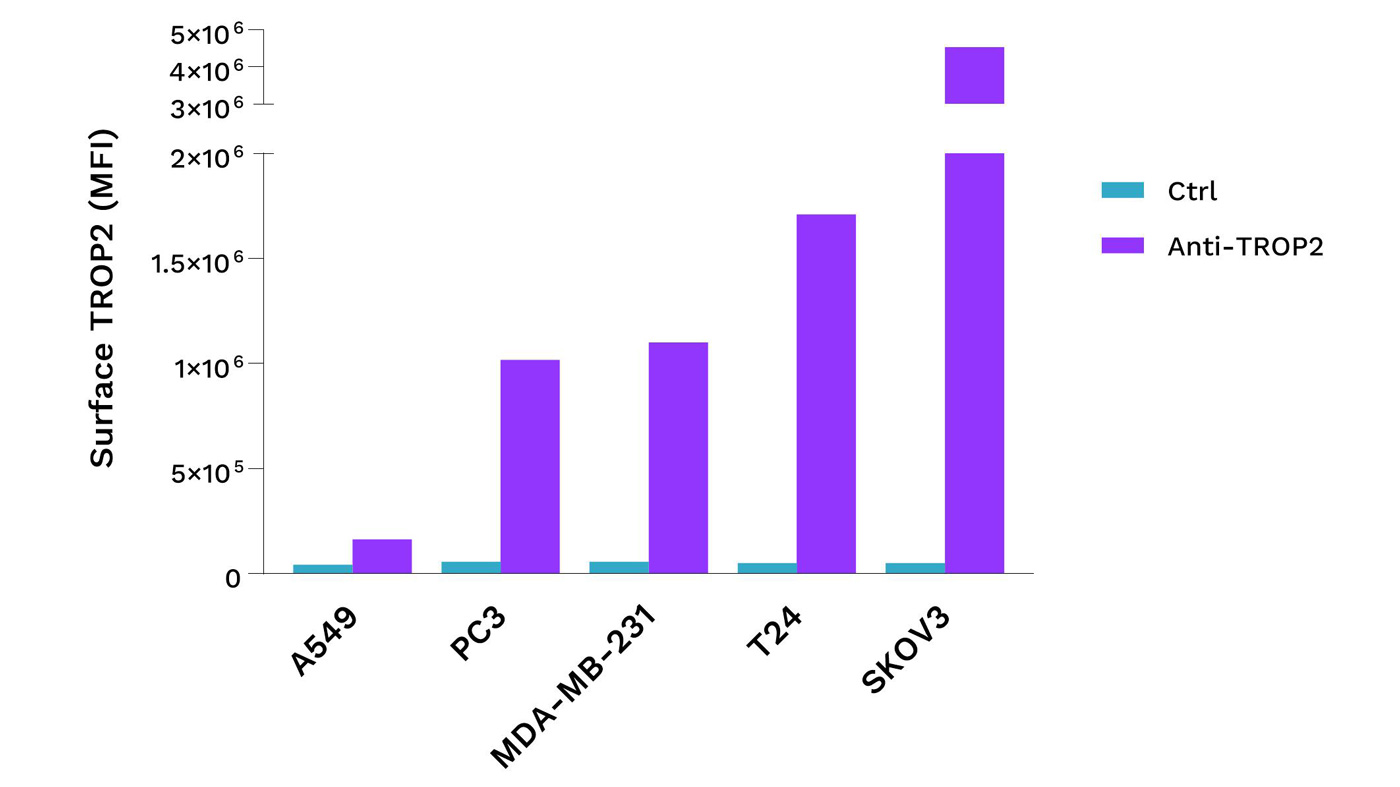
Step 1 — Qualify TROP2 expression across a cancer cell line panel

Cell surface TROP2 expression was characterized across a panel of human cancer cell lines including SKOV3, T24, MDA-MB-231, PC3 and A549.

This first step identified relevant TROP2-positive models for functional testing and provided the biological context needed to interpret differences in ADC response.
Key outputs

  • Cell surface TROP2 expression
  • Inter-model comparison
  • Model selection
Selection of cell lines based on TROP2 expression

Real-time ADC cytotoxicity

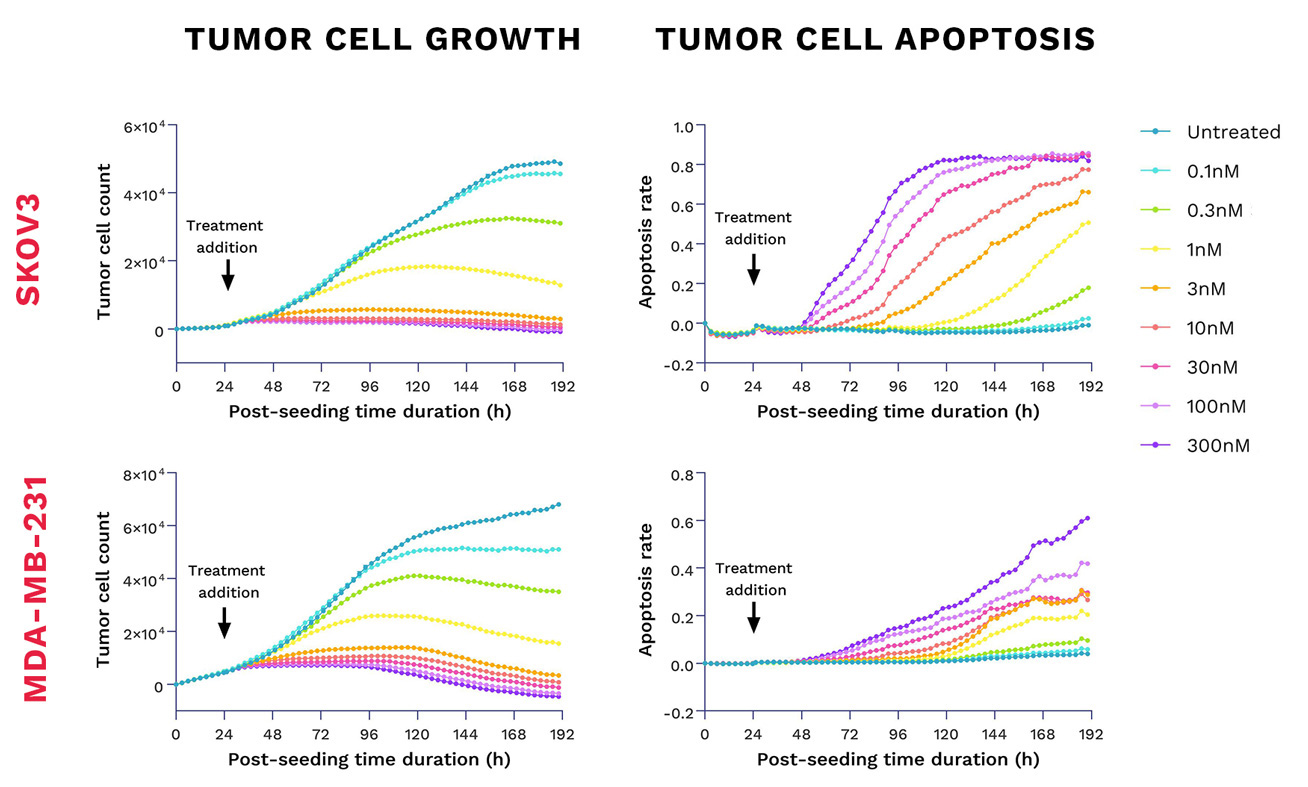
Step 2 — Measure functional ADC response over time

TROP2-positive SKOV3 and MDA-MB-231 cells were treated with sacituzumab govitecan and monitored by live-cell imaging.

Although both models expressed the therapeutic target, they displayed distinct sensitivity profiles to the ADC, highlighting the importance of pairing target-expression data with functional response measurements.
Key outputs

  • Proliferation & apoptosis kinetics
  • Concentration-dependent activity
  • Differential response between tumor models
TROP2-ADC exhibits differential tumor anti-proliferative and cytotoxic activity against TROP2-positive cell lines

ADC vs payload

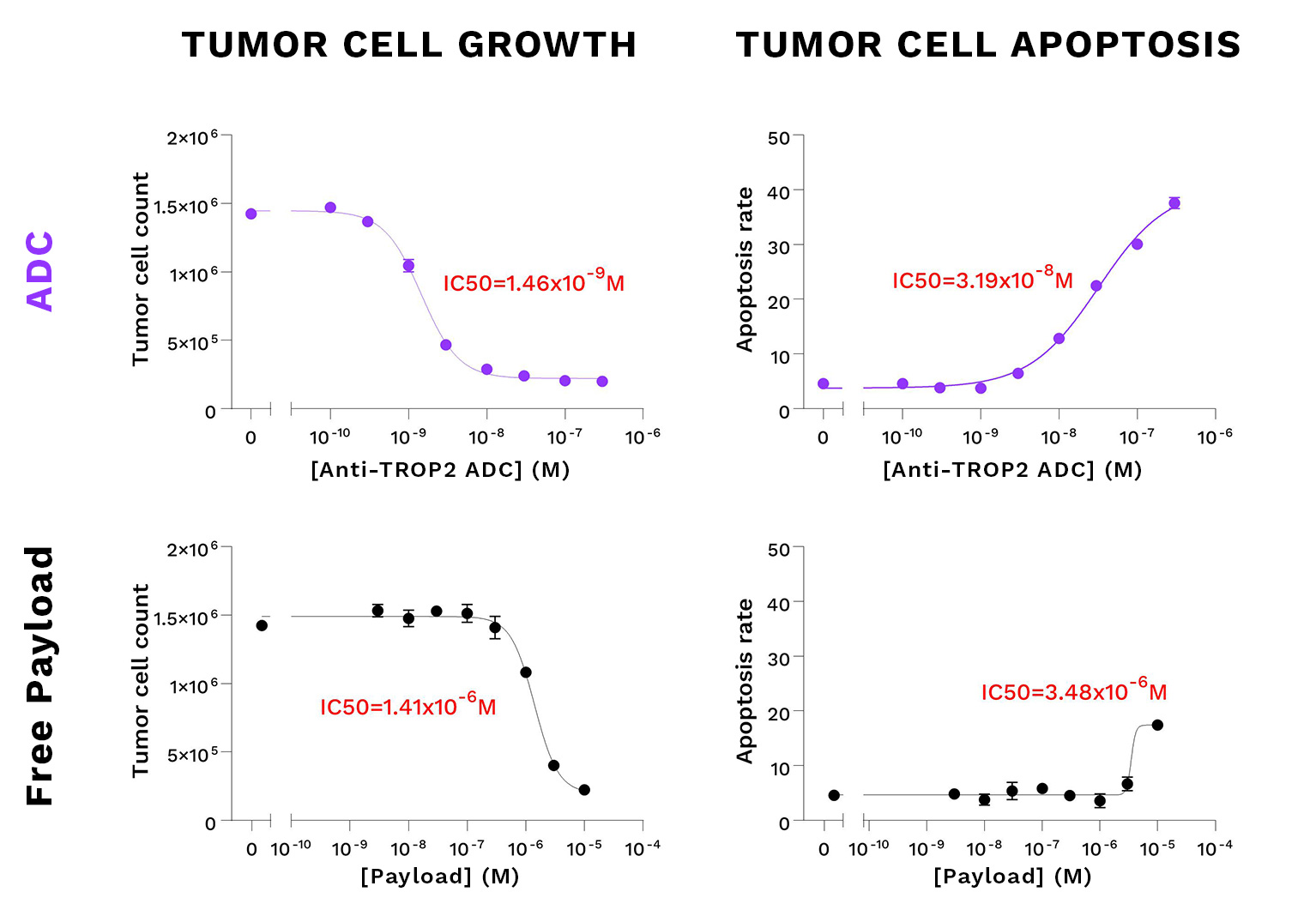
Step 3 — Put ADC response in the context of payload sensitivity

In SKOV3 cells, sacituzumab govitecan was compared with irinotecan, a prodrug of SN-38, to contextualize ADC activity relative to sensitivity to topoisomerase-I inhibition.

This comparison provides additional information on the intrinsic sensitivity of the tumor model to the payload mechanism, and can help guide subsequent mechanistic investigations.
Key outputs

  • Comparative growth inhibition
  • Apoptosis kinetics
  • AUC-based treatment response
Growth inhibition and cytotoxicity in SKOV3 cells: sacituzumab govitecan vs irinotecan

Build the study around the biological question

Core ADC characterization

Four questions structure the core ADC framework — from target biology to functional response in heterogeneous tumors. Each question is mapped to models, readouts and platforms selected according to the molecule and development objective.

Explicyte's Core ADC characterization framework: models, readouts and platforms mapped to each stage.
Step Stage & development question Models Key readouts Platforms & technologies
01 ADC target qualification & model selection Is the target expressed in the relevant tumors and models? Characterize tumor vs normal tissue expression, membrane localization, prevalence and heterogeneity, to inform model selection and translational context, and potential on-target/off-tumor liabilities. FFPE tumor cohorts & relevant normal tissue panels; cancer cell line panels stratified into target-high, target-low and target-negative tiers Target prevalence · membrane localization · intra-tumor heterogeneity · cell surface expression (MFI) · target expression in relevant normal tissue Multiplex IHC/IF, flow cytometry
02 ADC binding & internalization Does the ADC bind specifically and internalize efficiently? Target expression alone does not establish productive ADC uptake; binding and internalization kinetics provide a functional assessment of target engagement. Target-high, target-low and target-negative cell lines with isotype-matched controls Binding intensity & specificity · dose response · internalization kinetics · intracellular uptake Flow cytometry, live-cell imaging, pH-sensitive fluorescent probes
03 ADC efficacy & payload contribution Does the ADC induce target-dependent tumor cell killing, and how does this relate to payload sensitivity? Kinetic live-cell imaging captures how tumor cell killing develops over time, with control arms helping contextualize the contribution of target engagement and payload sensitivity. 2D tumor cell lines spanning differential target-expression levels; comparator arms with backbone antibody, ADC isotype, and free payload. Live-cell imaging, dose-response modelling
04 Heterogeneity & bystander activity How does target heterogeneity influence response? Mixed cell models can test how ADC activity changes as target-positive and target-negative populations are combined at defined proportions. Mixed cell co-cultures at defined target-positive / target-negative ratios; patient-derived organoids and fragments where relevant Bystander killing · target-density dependence · population-specific tumor cell elimination kinetics · response across mix ratios Live-cell imaging; flow cytometry; 3D models

PRECLINICAL ADC CHARACTERIZATION

ADC assays aligned with your development questions

Build a fit-for-purpose ADC study from target qualification to functional efficacy, mechanism and translational biomarkers. Each program can combine the assays and models most relevant to the molecule, indication and stage of development.

01 · ADC TARGET QUALIFICATION & MODEL SELECTION

Is the target expressed in the right tumors and models?

Characterize target prevalence, membrane localization and heterogeneity in tumor and normal tissues, and quantify cell-surface expression across cancer cell lines to select relevant experimental models.

Readouts: target prevalence · localization · heterogeneity · cell-surface expression

02 · ADC BINDING & INTERNALIZATION

Does the ADC bind specifically and internalize efficiently?

Confirm target-dependent binding and quantify ADC uptake over time in models with defined antigen expression.

Readouts: binding intensity · specificity · dose response · internalization kinetics · intracellular uptake

03 · ADC EFFICACY & PAYLOAD CONTRIBUTION

Does the ADC induce target-dependent tumor-cell killing?

Quantify dose- and time-dependent effects on proliferation, viability and apoptosis, with appropriate comparators such as unconjugated antibody, non-targeting ADC and free payload or relevant payload controls.

Readouts: growth inhibition · apoptosis · cytotoxicity · potency · relative comparator sensitivity

04 · HETEROGENEITY & BYSTANDER ACTIVITY

How does target heterogeneity influence response?

Use target-high, target-low and target-negative mixed cultures and, where appropriate, patient-derived 3D tumor models to investigate differential sensitivity and bystander killing. Fc-dependent immune mechanisms can also be evaluated where relevant.

Readouts: bystander killing · target-density dependence · ADCC/immune activation where relevant

05 · MECHANISM & TRANSLATIONAL BIOMARKERS

What drives response or resistance?

Integrate functional data with flow cytometry, transcriptomics, spatial profiling or Xenium STAMP to identify the cellular and molecular programs associated with ADC response or resistance.

Readouts: response biomarkers · resistant populations · cell-state changes · treatment-associated pathways

Discuss a fit-for-purpose ADC study

EXTEND THE STUDY WHEN THE BIOLOGY REQUIRES IT

Add complexity when it answers a development question

Modules can be added to core framework when a specific biological or translational question requires deeper resolution.
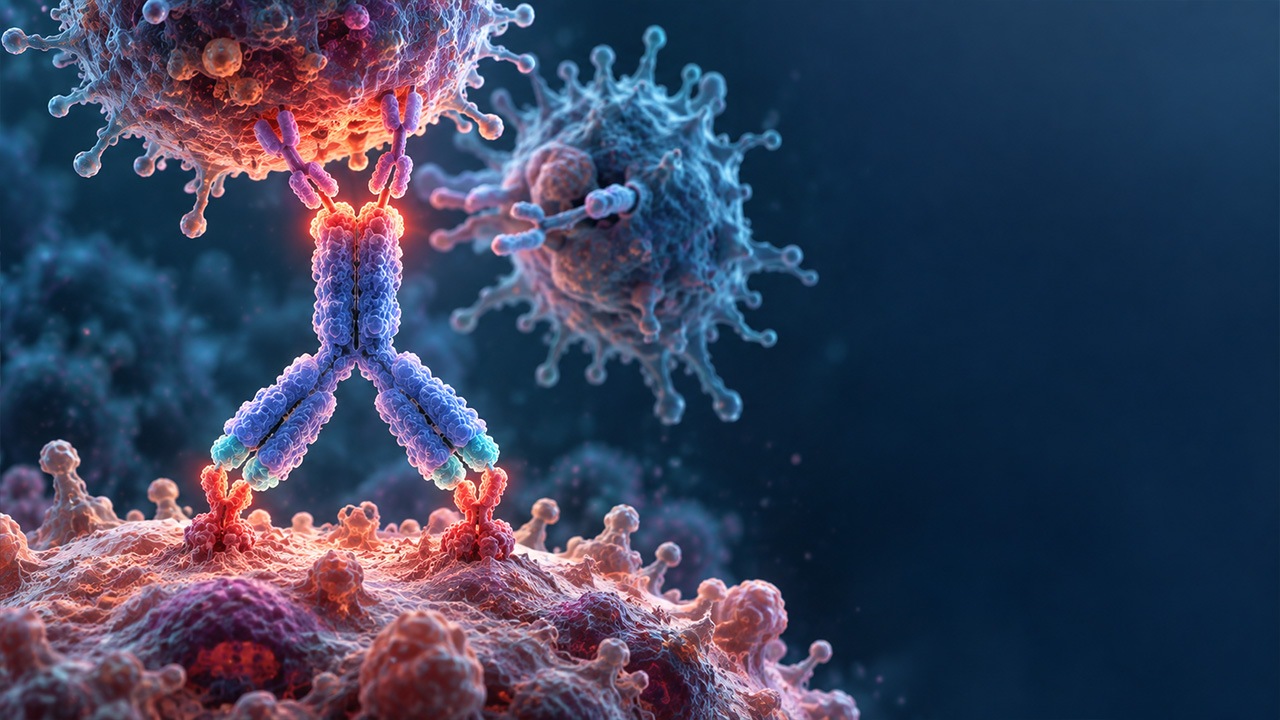
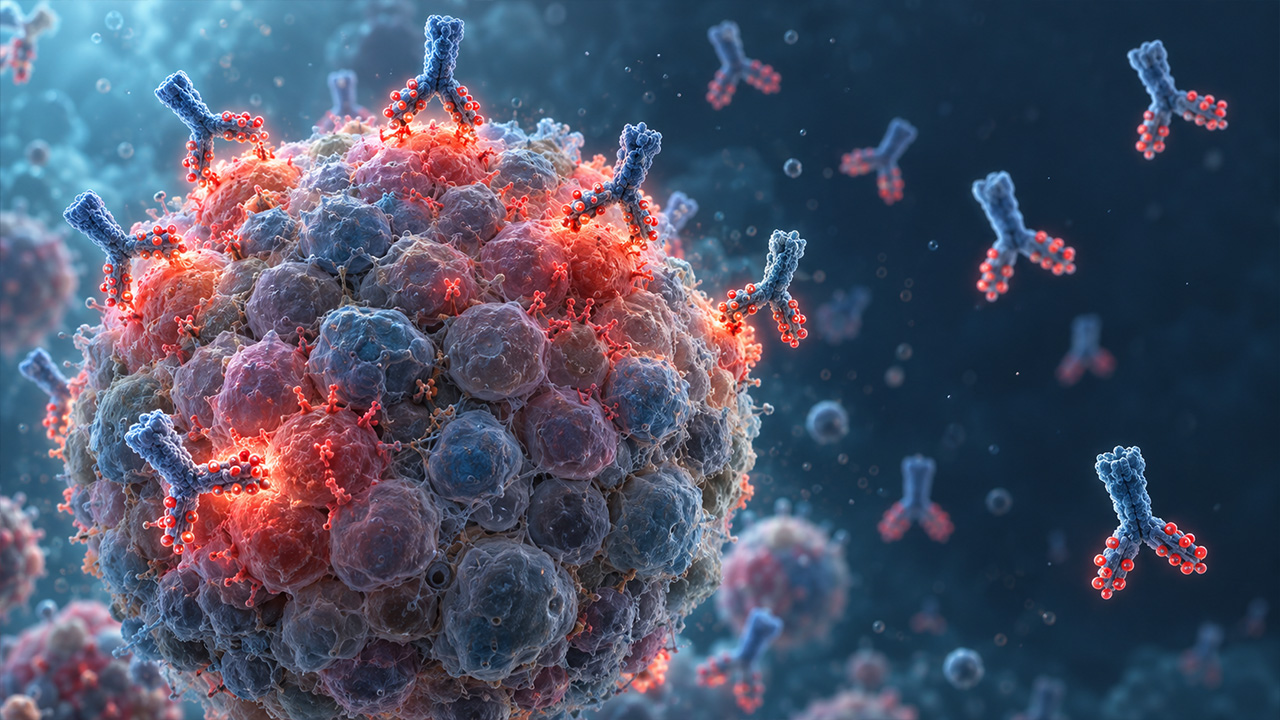
3D scientific render of an antibody engaging a tumor cell surface while immune effector cells recognize the Fc region — Fc-dependent immune activity in ADC preclinical testing

Fc-dependent immune activity

For ADCs with an Fc capable of engaging immune effector mechanisms, tumor cell killing can be evaluated in the presence of human PBMCs or isolated effector cell populations. This allows Fc-mediated activity, including ADCC, to be evaluated alongside payload-driven cytotoxicity.
Readouts: Tumor cell killing · immune cell activation · effector phenotype · cytokine secretion

3D scientific render of antibody-drug conjugates surrounding a patient-derived tumor spheroid with heterogeneous target expression — ADC testing in patient-derived 3D tumor models

Patient-derived 3D tumor models

Move beyond established cell lines into models that better represent patient-specific tumor biology, target heterogeneity, and tissue context. Early patient-derived organoids provide flexible 3D systems for functional treatment testing, while intact tumor fragments additionally retain native tissue architecture and spatial organization.
Readouts: Treatment response · apoptosis · target heterogeneity · tumor/immune response where relevant · inter-patient variability

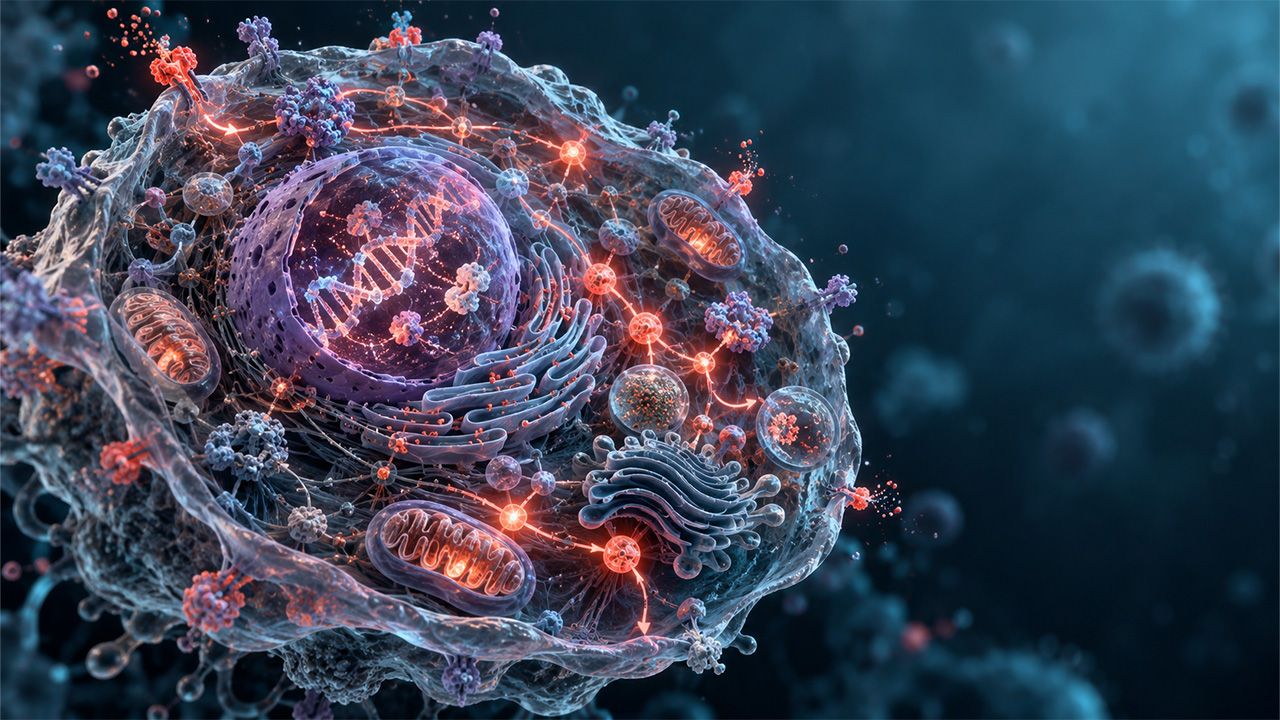
3D scientific render of a tumor cell with glowing molecular pathways and DNA — mechanism of ADC response and resistance profiling

Mechanism of response and resistance

When models with similar target expression show different sensitivity profiles to the ADC, deeper profiling can generate hypotheses around cellular states, pathways, and molecular features associated with sensitivity or resistance. Functional data can be integrated with flow cytometry, single-cell RNA-seq and spatial biology.

Readouts: Resistant cell populations · treatment-induced cell states · pathway modulation · response-associated transcriptional programs · candidate biomarkers

Discuss a fit-for-purpose ADC study

Why work with Explicyte as your ADC preclinical CRO?

Connect human target biology with functional testing

Every ADC program is different, but a few principles run through every Explicyte study — from model selection to functional characterization and deeper mechanistic investigations.

Dissect ADC response

Target-stratified models and comparator arms help distinguish the contributions of target expression, ADC uptake and intrinsic payload sensitivity.

Model tumor heterogeneity directly

Mixed tumor cell systems and patient-derived models investigate ADC activity in heterogeneous settings where target expression alone may not explain response.

Escalate profiling when it adds value

Flow cytometry, transcriptomics and spatial biology can be added when a functional result raises a mechanistic or translational question.

Scientific continuity end-to-end

A dedicated Study Director oversees study performance and data interpretation, with pathology, molecular and bioinformatics expertise available as needed

The Explicyte team at their Bordeaux laboratory

Paul Marteau, PharmD (study director), Imane Nafia, PhD (CSO), Loïc Cerf, MSc (COO), Alban Bessede, PhD (founder, CEO), Jean-Philippe Guégan, PhD (CTO)

Contact our team

Discuss your ADC preclinical program

Tell us your target, ADC format, payload, indications and current development stage. We can help define the models, assays, and complementary profiling needed to characterize target biology, internalization, functional activity, heterogeneity, and translational response.

Explicyte (Bordeaux, France) uses your details to respond to your request. Privacy policy

ADC assays FAQ

Frequently asked questions about ADC preclinical testing

What controls are needed to demonstrate target-dependent ADC activity?

Control selection depends on the ADC and the development question. Where available, studies can combine target-negative or target-low tumor models with the unconjugated antibody, a non-targeting ADC and the free payload. These controls address complementary questions and help distinguish target-dependent ADC delivery from antibody-intrinsic activity, nonspecific conjugate effects and intrinsic payload sensitivity.

Target expression is an important determinant of ADC activity, but expression alone does not predict response. Cell-surface abundance and heterogeneity, ADC binding and internalization, intracellular processing, intrinsic payload sensitivity, linker–payload properties and bystander activity can all influence efficacy.

Explicyte therefore connects target profiling with functional testing to place target expression in the broader biological context of ADC response.

ADC uptake can be characterized using flow-cytometry and imaging-based methods in tumor models with defined target-expression profiles. Time- and concentration-dependent internalization can then be interpreted alongside surface expression and functional cytotoxicity to determine whether differences in uptake may contribute to differential ADC response.

ADC response can be compared with the unconjugated antibody, a non-targeting ADC and the free payload when these controls are available and appropriate.

The free payload provides information on intrinsic cellular sensitivity to the payload mechanism, while target-negative models and non-targeting conjugates help determine how strongly cytotoxicity depends on specific ADC delivery.

Bystander activity can be assessed using mixed tumor-cell cultures containing distinguishable target-positive and target-low or target-negative populations.

Population-specific killing is monitored after ADC treatment to determine whether cytotoxic activity extends beyond cells directly expressing the target.

Yes. ADC response can be evaluated in patient-derived organoids and intact tumor fragments.

These models capture patient-specific tumor characteristics and heterogeneous target expression, while intact tumor fragments additionally preserve native tissue architecture and spatial organization.

Yes, when relevant to the ADC. Tumor cells can be combined with human PBMCs or selected immune-effector populations to determine whether Fc-mediated mechanisms contribute additional antitumor activity alongside payload-mediated cytotoxicity.

Yes. Responsive and less-responsive models can be compared using flow cytometry, transcriptomics, spatial biology or other molecular profiling approaches.

Explicyte Oncology CRO logo

Capabilities

Modalities